Curaçao · Tera Kora to Westpunt

Bandabou

also written Banda Abou: “the lower side”

The western half of Curaçao, from the windmills at Tera Kora out to Westpunt at the tip. No cruise ships and no high-rise hotels. Most of the island's best beaches, Christoffel and Shete Boka national parks, the island's highest mountain, and flamingos in the salt pans.

Bandabou is the quiet part of the island. A string of small villages along two roads, dry hills covered in cactus, and a side road down to a beach every few minutes.

If you came to Curaçao for the water and the landscape more than the nightlife, this is the part you came for.

Know the island

The three parts of Curaçao

People on the island split it in three. It helps to know which is which when you read about places to stay.

The middle

Willemstad

The city: the colorful waterfront of Punda and Otrobanda, the floating bridge, the cruise terminal, the museums, most of the restaurants and shops. The old center is a UNESCO World Heritage site. Most hotels and the airport are in or near it.

The east · “the upper side”

Bandariba

Jan Thiel, Caracasbaai, Spanish Water, Santa Barbara. Newer and more built up, with beach clubs, villas and marinas. Boat trips to Klein Curaçao leave from here.

The west · “the lower side”

Bandabou

The rest of this page. From Willemstad it's about 30 minutes to Tera Kora and about 50 to Westpunt.

Getting your bearings

Two roads and seven villages

Two roads run west from Tera Kora and meet again at Westpunt.

The northern road (Weg naar Westpunt) goes through Barber, past the entrance to Christoffel Park and Shete Boka, and into Westpunt from above. It's the faster one.

The coast road turns off toward Sint Willibrordus and runs through Soto, Santa Cruz and Lagun, with a side road down to almost every beach. It's the prettier one.

  • Tera KoraWhere Bandabou starts, just past the windmills. The New California supermarket is here.
  • Sint WillibrordusThe salt pans with the flamingos, the big church on the hill, and the WILLIWOOD sign. Turnoffs for Daaibooi, Porto Mari and Cas Abou.
  • BarberThe main village on the northern road, with the Sunday market.
  • SotoOn the coast road, above the Santa Martha bay.
  • Santa CruzHòfi Mango and Playa Santa Cruz.
  • LagunA small village around one of the best snorkeling coves on the island. Jeremi and both Knip beaches are just past it.
  • WestpuntThe fishing village at the tip: Playa Forti, Playa Piskadó, Playa Kalki.

VillagesThings to doBlue Tide Westpunt

Things to do

Parks, museums and a mango forest

Christoffel National Park

The biggest park on the island, on three old plantations, around Mount Christoffel, the island's highest point at 372 m. The climb takes two to three hours round trip and ends in a rocky scramble with a view over the whole west end. The summit is on foot only. If you'd rather not climb, the rest of the park has easier trails and two driving routes.

Please leave the Bluetooth speaker at home and enjoy nature with your fellow hikers.

When Open 6 AM to 2 PM. You can't start the mountain after 10 AM because of the heat, so be at the gate early. Bring two liters of water each. No dogs.
Shete Boka National Park

The rough north coast, right next to Christoffel. “Shete Boka” means seven inlets. At Boka Tabla you walk down into a cave while the waves crash in. Boka Pistol fires spray into the air like a shot. Boka Wandomi has a natural bridge. Sea turtles nest on the small beaches here from May to December.

When Open daily, with last entry around 4 PM. It pairs well with Christoffel: climb first, then come here. No shade, so bring water and a hat.

Hòfi Mango

An old plantation in Santa Cruz turned into a park: a shaded mango forest, walking paths, a viewpoint, a zipline, and the restaurant Kultura Kòrsou. A cool, green hour or two on a dry island.

When Mornings, for the shade.

Museo Tula at Landhuis Knip

The plantation house where the 1795 revolt began, now a museum about that fight for freedom (see the history below). It sits just above Grote Knip, so it's easy to combine with the beach. Take the guided tour.

When Tuesday to Sunday, 10 AM to 2 PM.

Savonet Museum

In the plantation house at the Christoffel entrance. The story of the plantation, the people who owned it and the people enslaved there, going back to the island's first inhabitants.

When Pair it with the park. Good for the people in your group who skip the climb.

The flamingos at Sint Willibrordus

They feed in the salt pans at Jan Kok, right beside the road. Some days there are dozens and some days almost none. Stay by your car, don't walk out onto the flats, and leave the drone at home.

When Early morning or late afternoon. An easy stop on the way to Porto Mari or Cas Abou.

Wildlife

What you'll see without trying

Birds

More than 260 species have been recorded in Christoffel Park alone. These are the ones you'll notice first:

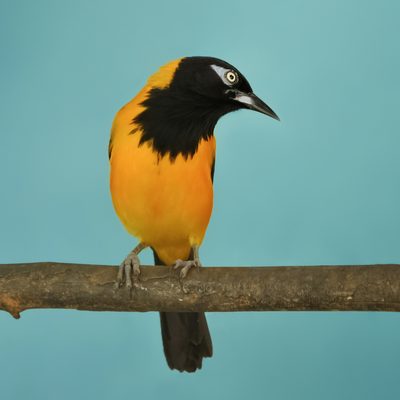
  • Trupial (Venezuelan troupial)
    Trupial Venezuelan troupial
    Bright orange and black, with a loud whistle.
    Photo: Paolo Costa Baldi, CC BY 3.0
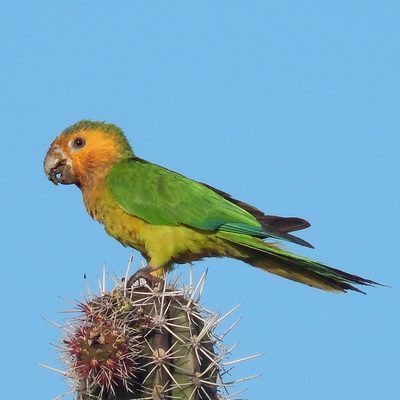
  • Prikichi (brown-throated parakeet)
    Prikichi Brown-throated parakeet
    Small, green, yellow-faced, usually in noisy groups.
    Photo: WillemVanA, CC0
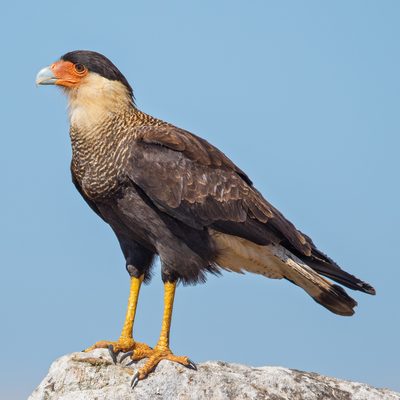
  • Warawara (crested caracara)
    Warawara Crested caracara
    The big bird of prey walking along the roadside.
    Photo: Andreas Trepte, CC BY-SA 4.0
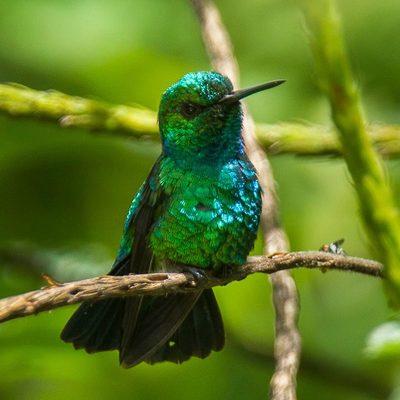
  • Blenchi (blue-tailed emerald)
    Blenchi Blue-tailed emerald
    The tiny green hummingbird at any flowering bush.
    Photo: Francesco Veronesi, CC BY-SA 2.0
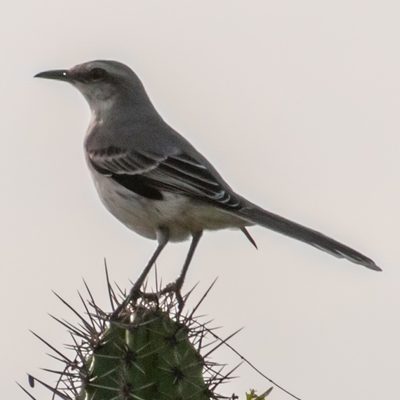
  • Chuchubi (tropical mockingbird)
    Chuchubi Tropical mockingbird
    Grey, and singing from the top of every cactus.
    Photo: Wilfredor, CC0
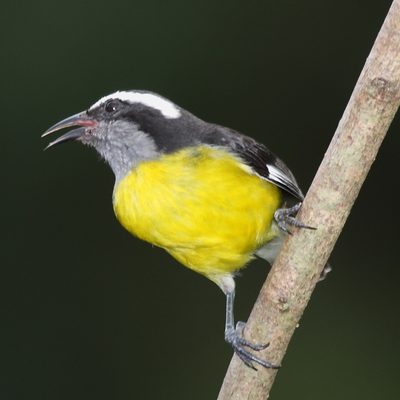
  • Barika hel (bananaquit)
    Barika hel Bananaquit
    Tiny, with a yellow belly and a white eyebrow. The one after the sugar on your breakfast table.
    Photo: Dominic Sherony, CC BY-SA 2.0

White-tailed deer

Curaçao has its own small deer, and most of them live in Christoffel Park. They're shy. Your best chance is early, from the car, on the park's driving routes.

Iguanas and lizards

Green iguanas are everywhere, including in the road. The bright blue lizard darting across the path is the blòblò, a whiptail.

Sea turtles

Green and hawksbill turtles feed along this coast all year. Our Curaçao snorkel guide covers what else is down there, and the reef guide covers what we've found off our own steps in Westpunt.

On the road

Goats, donkeys and the occasional deer, especially at night. Drive slowly after dark.

The free iNaturalist app will put a name to almost anything you photograph here.

Beaches, food and shops

The practical side

Marshe di Barber

The Sunday morning market in Barber. Produce, baked goods and a few food stalls: fish soup, johnny cakes, pumpkin pancakes. Go early.

Supermarkets

There's no big supermarket in Bandabou. Do your main shop on the way out: Centrum at Piscadera is the best and is on the route from the airport. New California in Tera Kora works for a top-up during your stay.

The Chinese markets

Almost every village has a small supermarket, usually run by a Chinese-Curaçaoan family. Cold drinks, snacks, bread, canned goods, basic produce, sunscreen, beer. Don't expect fresh meat or much choice, but for anything you forgot it's five minutes away instead of forty.

Gas and cash

There's no gas station in Westpunt itself. The nearest are on the northern road, including one in Barber. ATMs are scarce this far out, so carry some guilders.

A little history

Plantation country, and the man who walked out of it

For most of its history the west of Curaçao was plantation country. The plantation houses, called landhuizen, still stand on the hilltops: Knip, Savonet, Dokterstuin, Klein Santa Martha, Jan Kok, Daniel. Several are now museums, restaurants or small hotels. The land was too dry for sugar on any scale, so the plantations raised livestock, grew sorghum and worked the salt pans, all with enslaved labor.

On August 17, 1795, a man named Tula, enslaved at the Knip plantation, went to his owner with 40 or 50 others and refused to work. He argued that they were entitled to freedom. Over the following days they walked from plantation to plantation through Lagun, Santa Cruz and Porto Mari, freeing people as they went, until about 2,000 had joined. The revolt held out for a month. Tula was betrayed, captured and executed on October 3. Slavery on Curaçao was not abolished until 1863.

Tula is a national hero today, and August 17 is marked every year. The house where it started is the museum above Grote Knip. If you spend a day at that beach, the museum is five minutes up the hill, and it changes how you see the place.

Staying in Westpunt?

Blue Tide Westpunt

We put this guide together for our guests. Blue Tide is a top-floor two-bedroom in Punta Azul, at the far end of Bandabou, with steps down to the reef.

Check dates & book direct

bluetidewestpunt@gmail.com · Facebook · Instagram

© 2026 Blue Tide Westpunt · Punta Azul, Westpunt, Curaçao