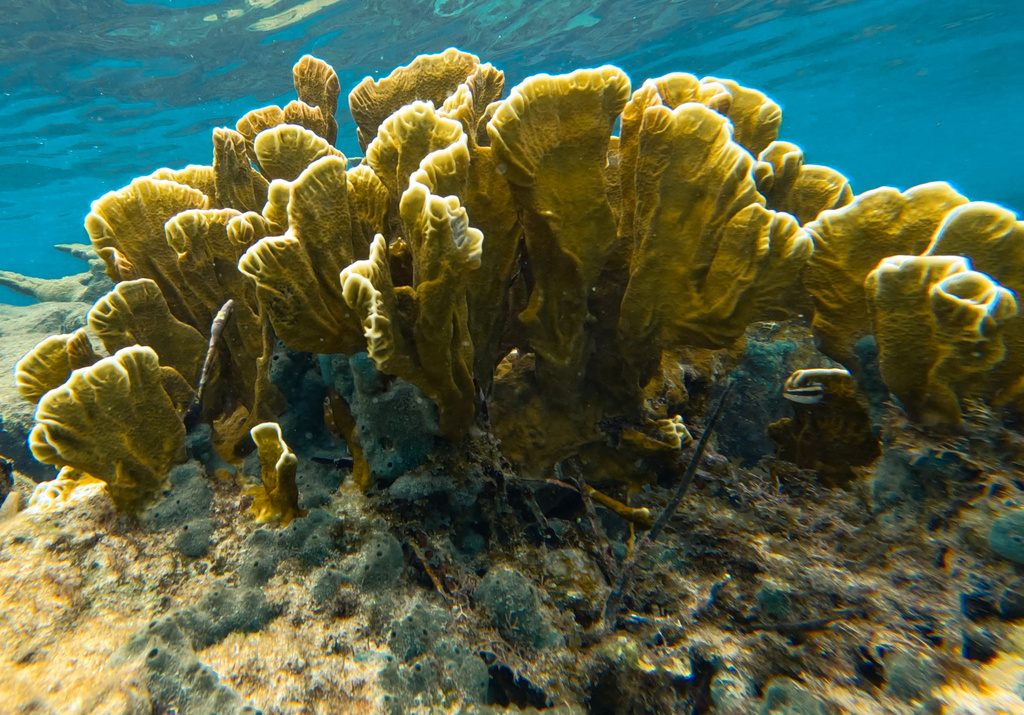
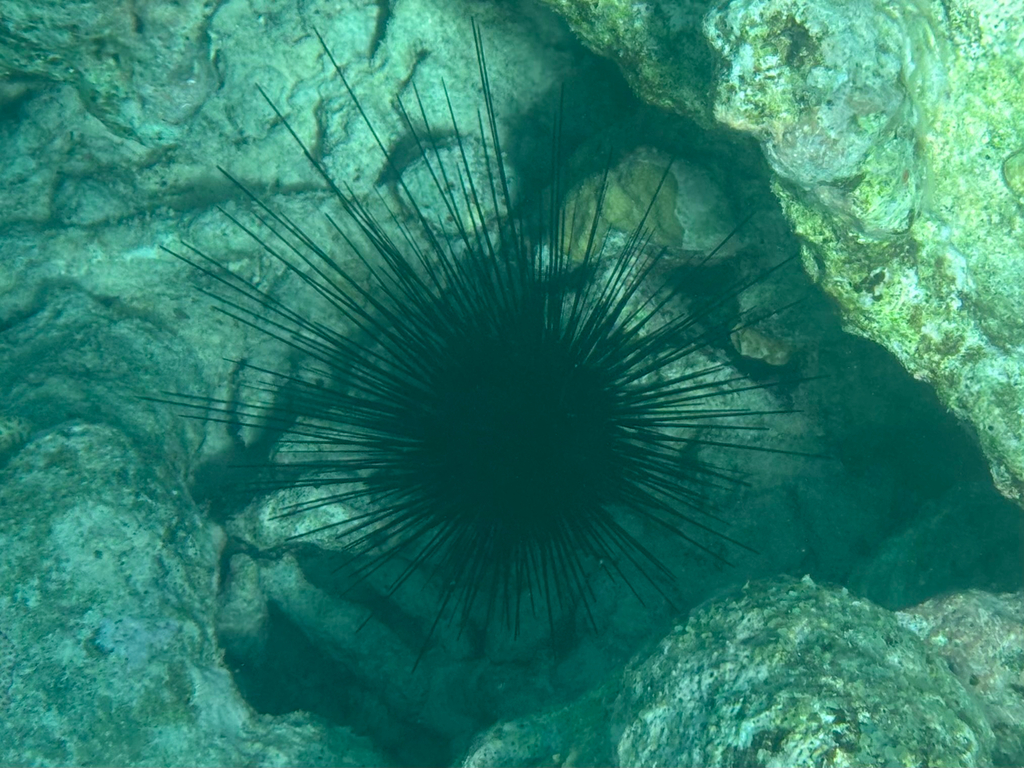
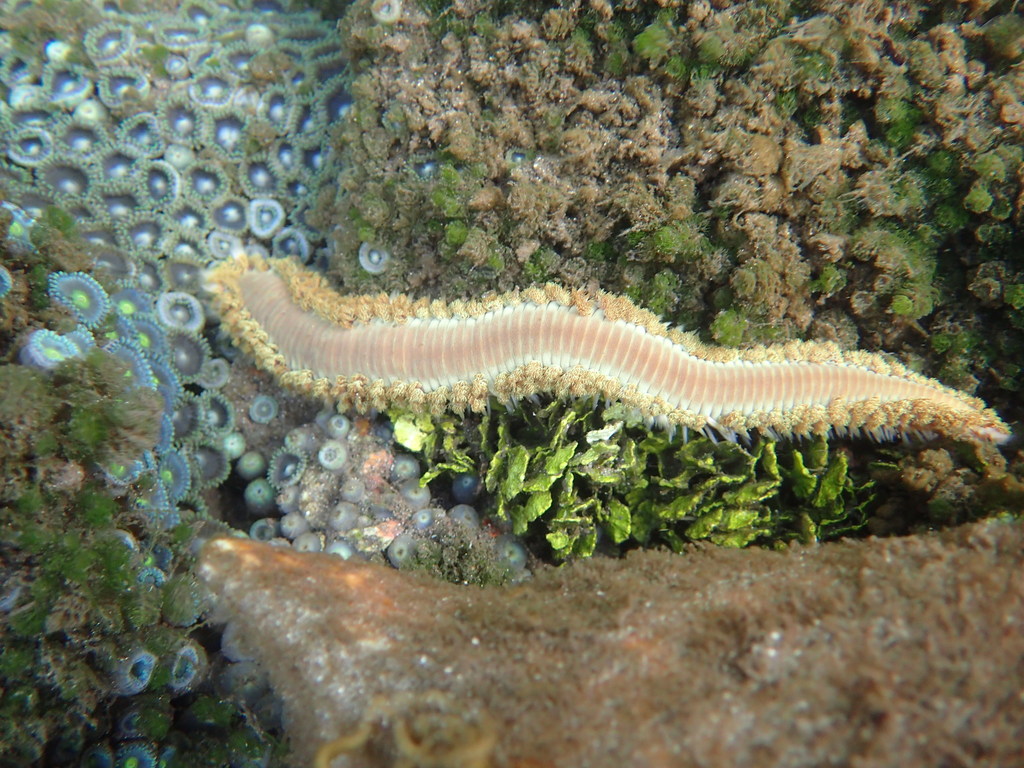
 Photo: Geoff Shuetrim, CC BY
01
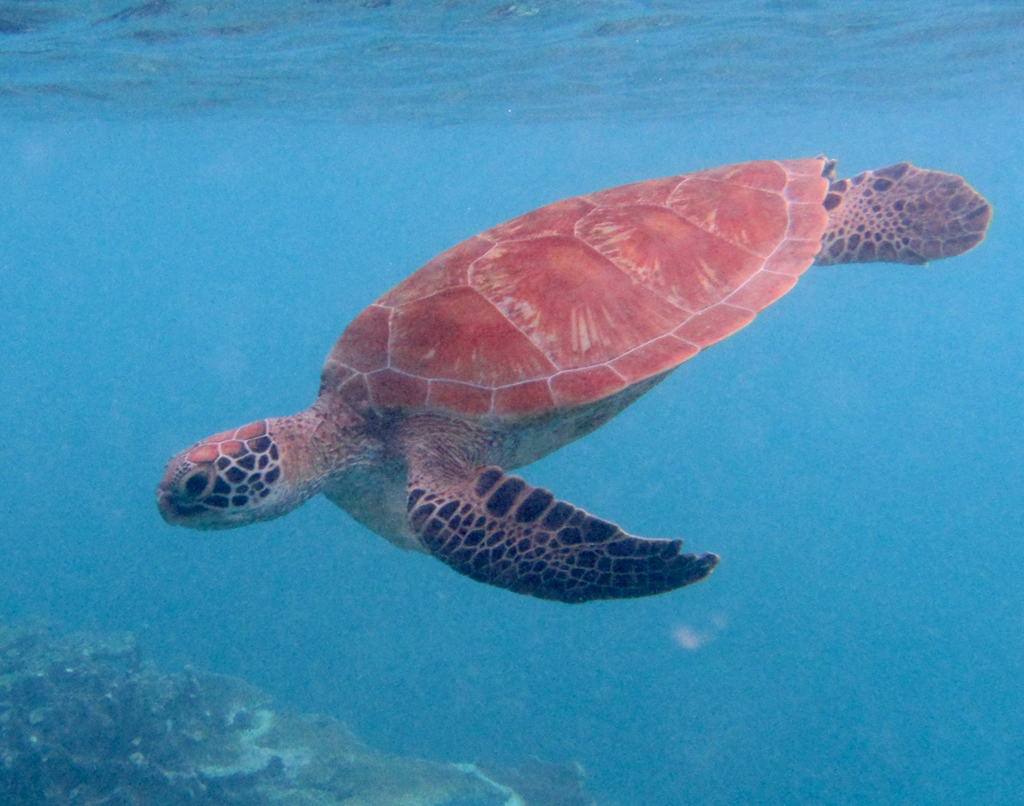
Green Sea Turtle
Chelonia mydas
Top sighting
The one everyone's hoping for, and in Curaçao there are a lot of them. Snorkel a few beaches and you'll very likely see one. Greens have a short, rounded snout and a smooth shell, and they surface every few minutes for air. They're endangered and protected — hang back a few body lengths, never touch or chase, and let them come and go on their own terms.
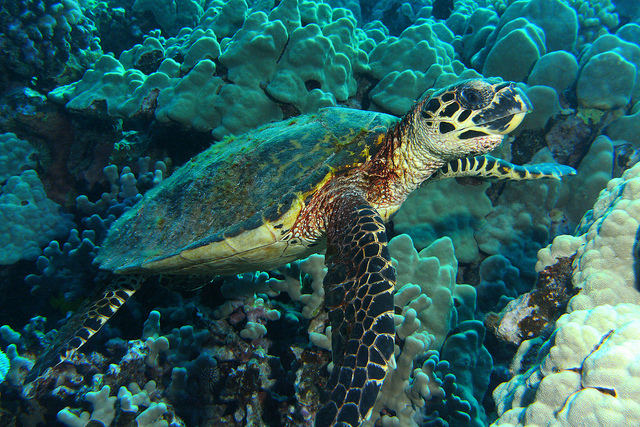 Photo: Kyle Van Houtan, CC BY
02
Hawksbill Sea Turtle
Eretmochelys imbricata
Critically endangered
Easy to mix up with a green, so here's the tell: a hawksbill has a narrow, pointed, bird-like beak and a shell of overlapping plates with jagged back edges. They stick close to the reef, picking at sponges, and you'll see plenty of them around the island. They're critically endangered, so give them extra space.
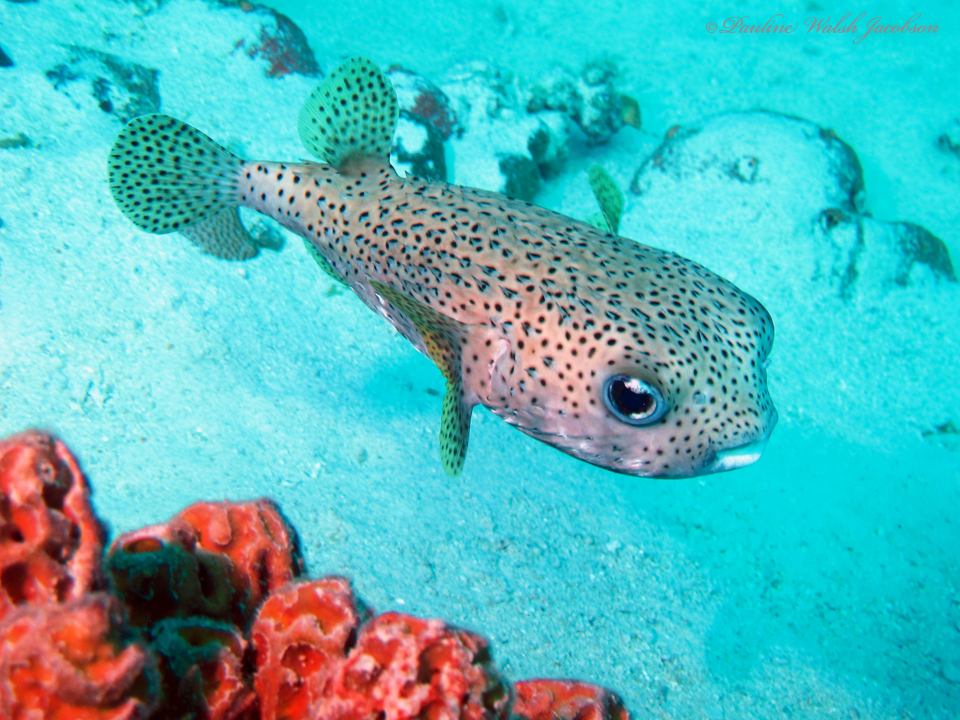 Photo: Pauline Walsh Jacobson, CC BY 4.0
03
Porcupinefish
Diodon hystrix
Big and curious
A slow, round-bodied fish covered in short spines that lie flat unless it feels threatened. They get big, up to around 18 inches, and genuinely curious — give one space and it'll often drift closer to check you out. Usually hovering near rocks or ledges during the day.
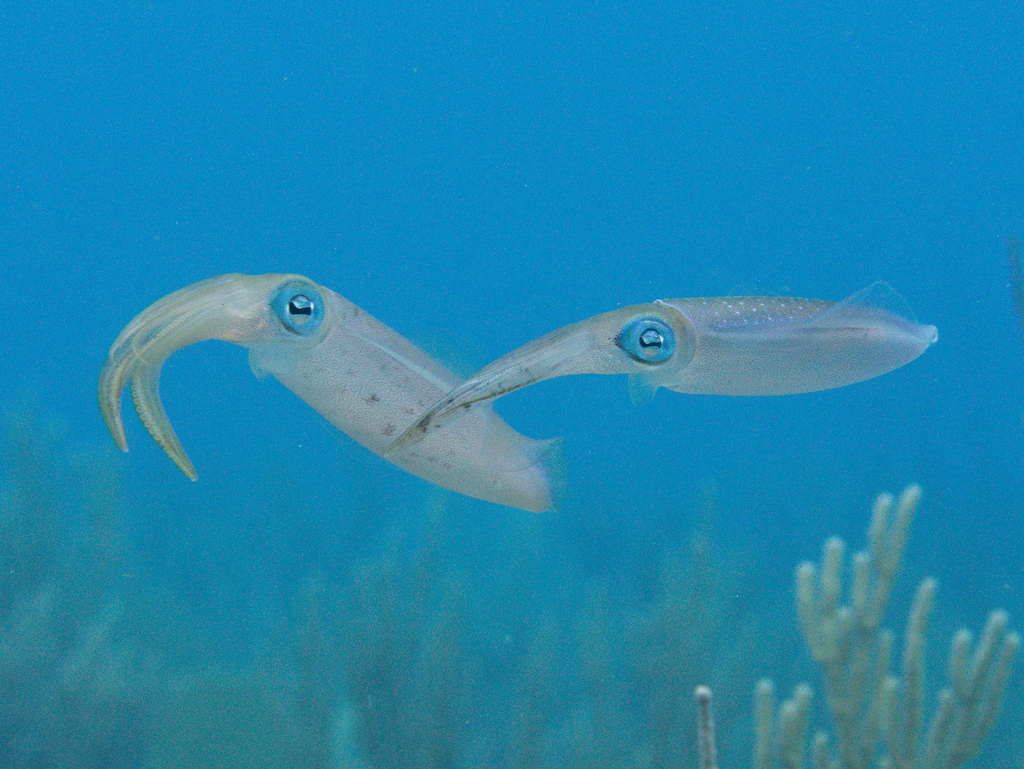 Photo: Dan Schofield, CC BY
04
Caribbean Reef Squid
Sepioteuthis sepioidea
Curious and colorful
Usually in small groups hovering in a neat line near the surface, and often just as curious about you as you are about them. Stay still and they'll hold their ground, flashing through colors and patterns — that's how they talk to each other. Sheltered coves and cliff walls are good places to look.
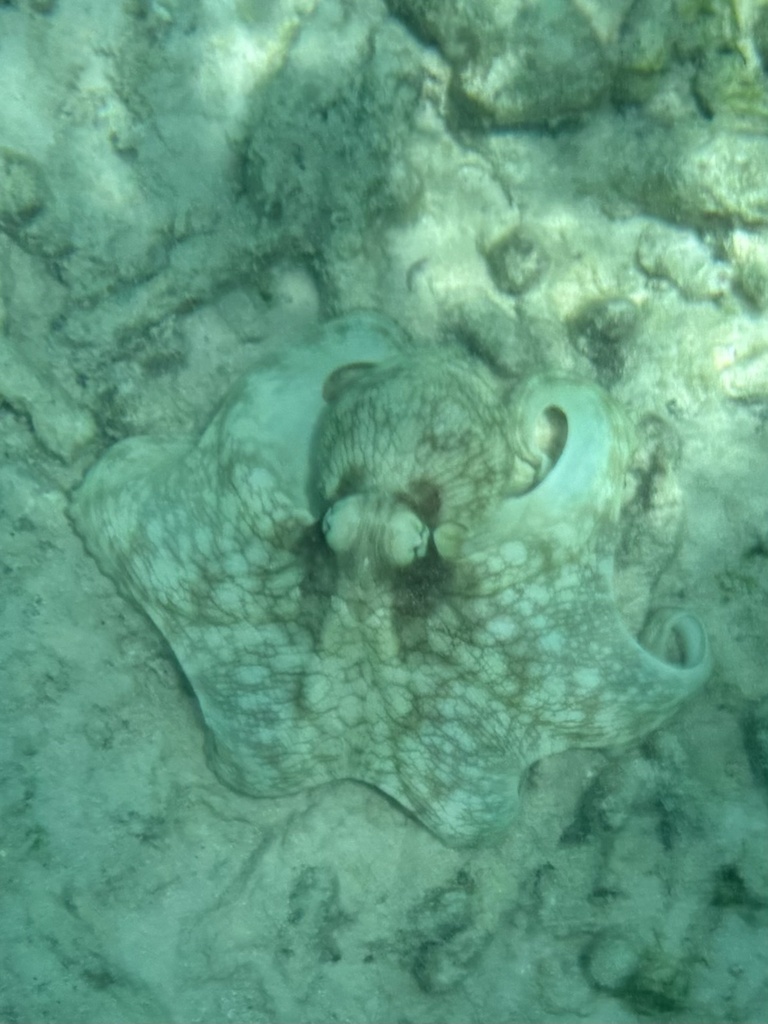 Photo: Denis Hurley
05
Brazilian Reef Octopus
Octopus insularis
Look for the den
This is the octopus you'll find around Curaçao, and unlike a lot of octopuses it's often out hunting during the day. Look for a small hole with a little pile of empty shells outside it — that's a den, and there may be an eye watching you. Out in the open it changes color and texture almost instantly, from reddish-brown to pale and bumpy in a blink.
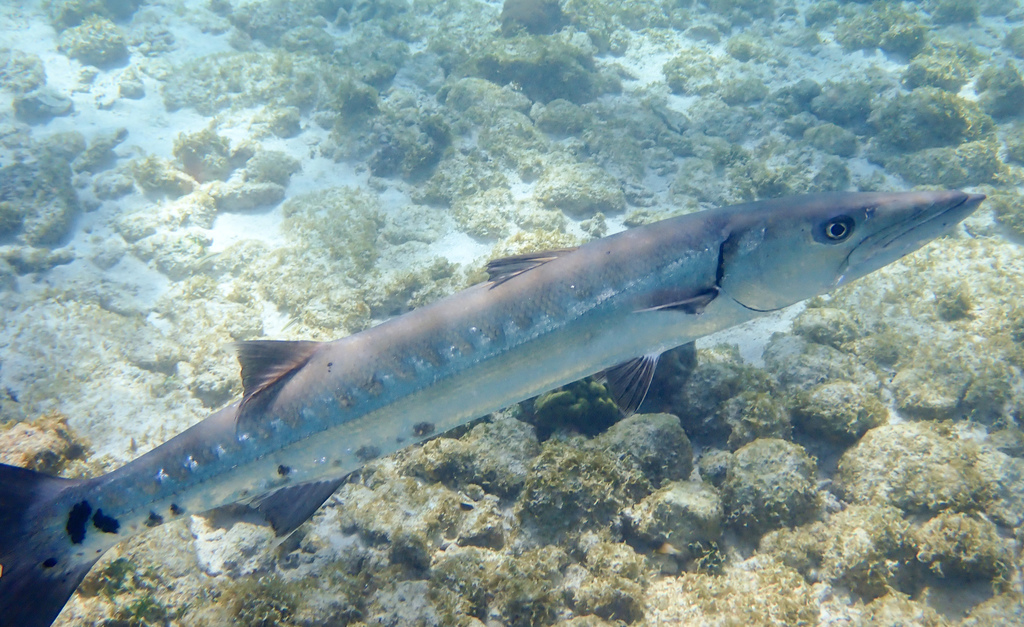 Photo: Don Loarie, CC BY
06
Great Barracuda
Sphyraena barracuda
Watchful, keeps its distance
Long, silver, and toothy, usually hanging nearly motionless a little way off, keeping an eye on things. They mostly keep to themselves and aren't interested in snorkelers, but give them their space. Leave shiny jewelry on shore, since a flash of metal can look like a baitfish.
07
Eels
Morays and more
How many kinds can you spot?
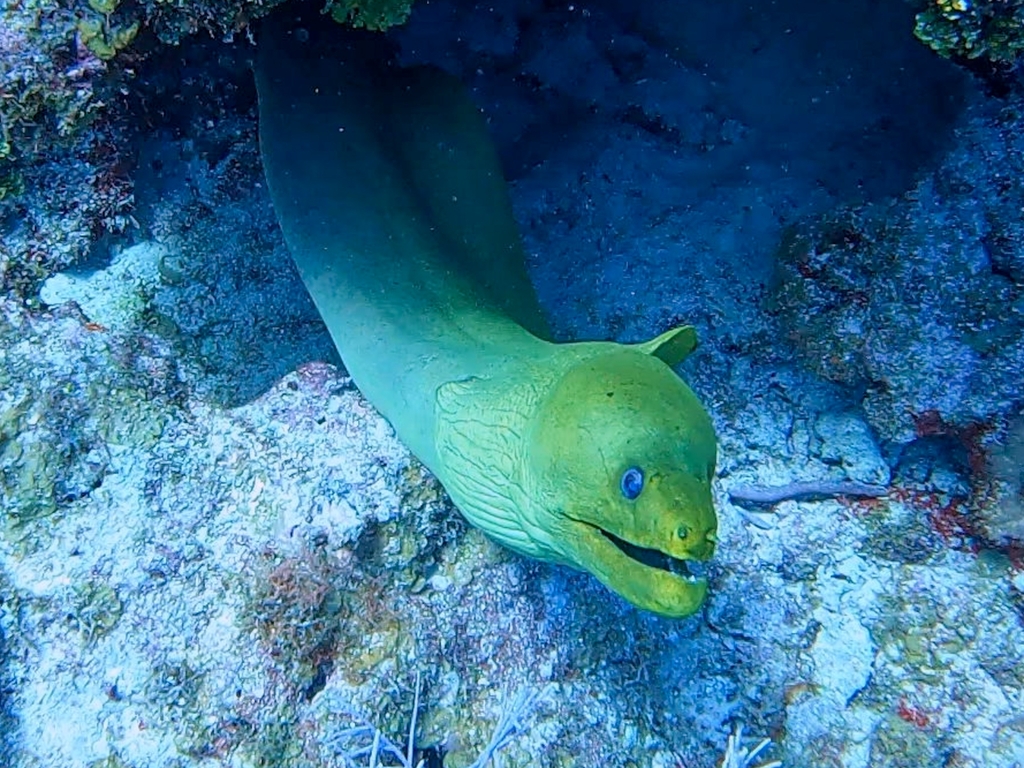 Photo: Dan Schofield, CC BY
Green MorayGymnothorax funebris
The big one. Can grow well over five feet, and we've seen one that size. Usually just a head and a slowly opening mouth poking out of the reef.
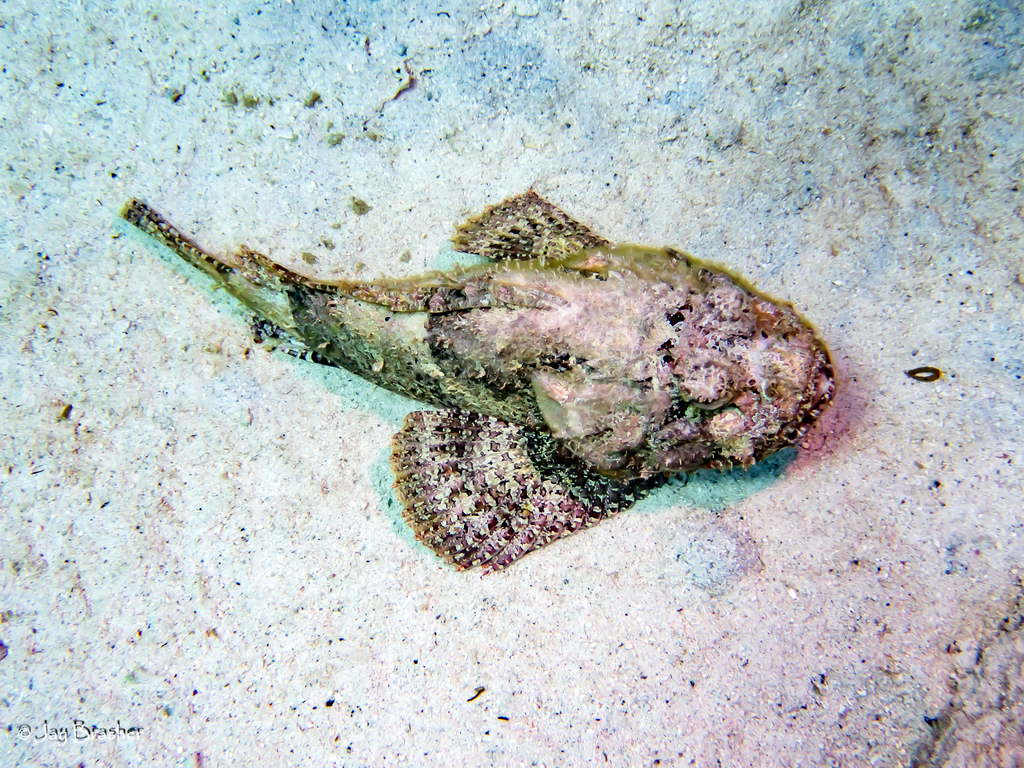
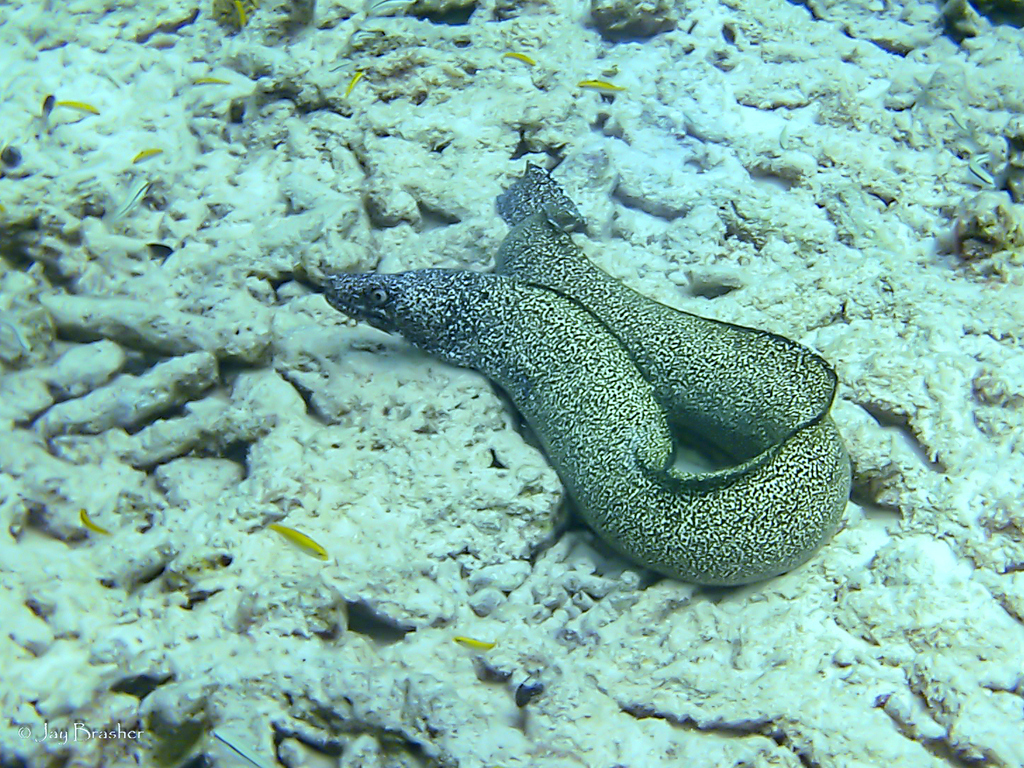 Photo: Jay Brasher, CC BY
Spotted MorayGymnothorax moringa
The one you're most likely to see — white-ish with dark spots, peeking out of a hole. Often out hunting in the open in the early morning or evening.
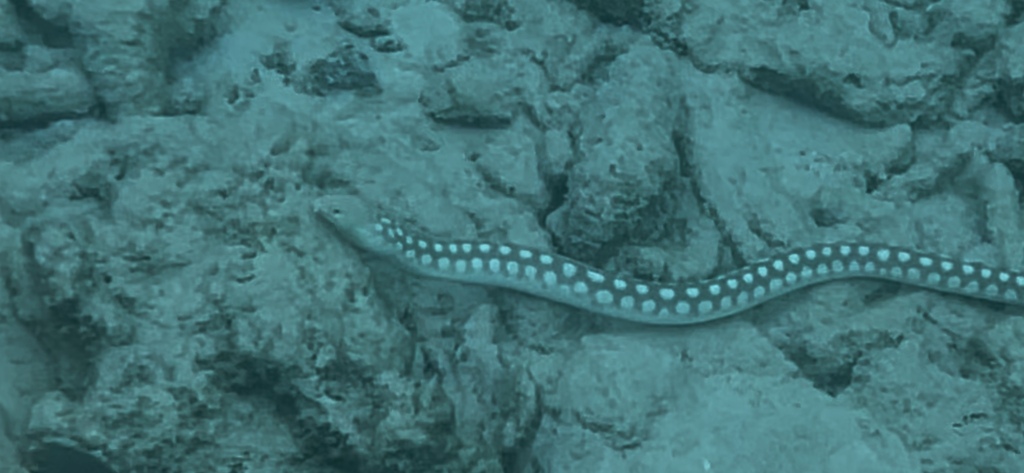 Photo: Jacob Weston, CC BY
Sharptail EelMyrichthys breviceps
Not actually a moray. Slender and spotted, and unlike the morays it swims right out in the open, poking its head into the sand and rubble looking for food.
There are lots of kinds of eels around the island, and once you start noticing them you'll spot them everywhere. The mouth opening and closing isn't a threat — that's just how they breathe. We've also seen banded ones, and chain and goldentail morays live around the island too. Keep your hands out of holes and crevices.
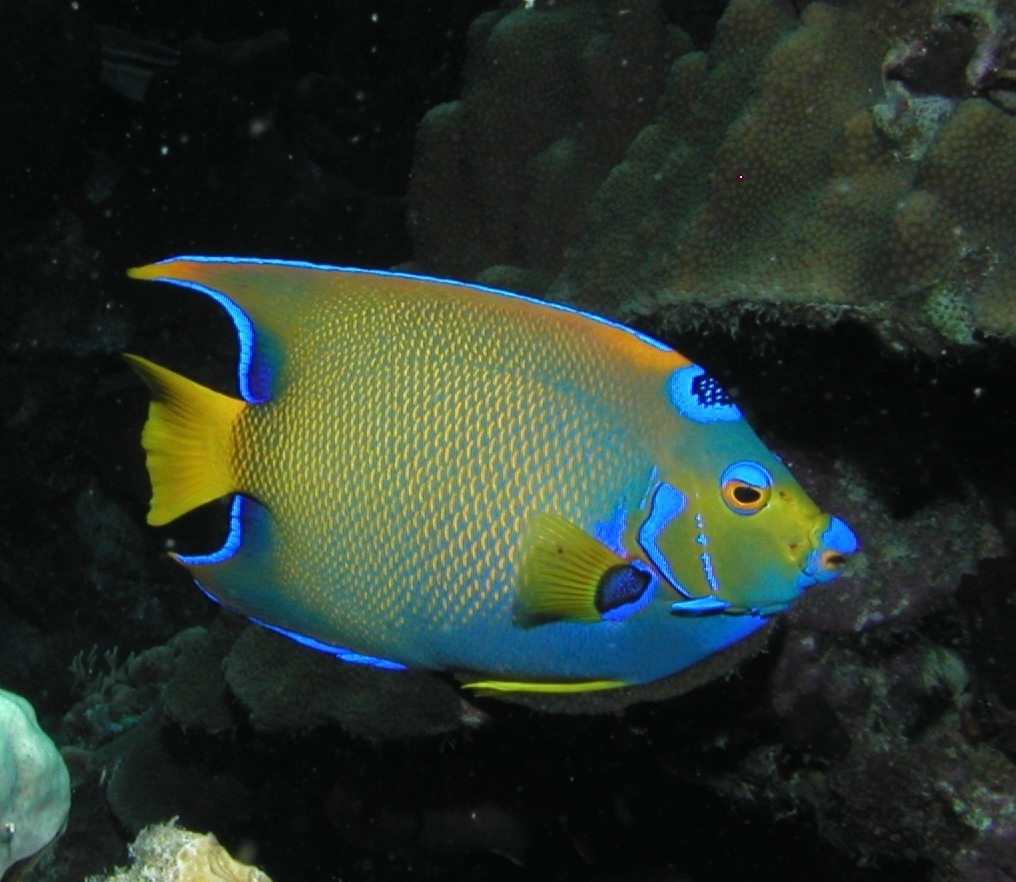 Photo: desertnaturalist, CC BY 4.0
08
Queen Angelfish
Holacanthus ciliaris
Showstopper
Gold body, blue-tipped fins, and a dark "crown" spot ringed in electric blue on the forehead, which is where the name comes from. Solitary and a little shy, but worth the extra few minutes of quiet drifting to find.
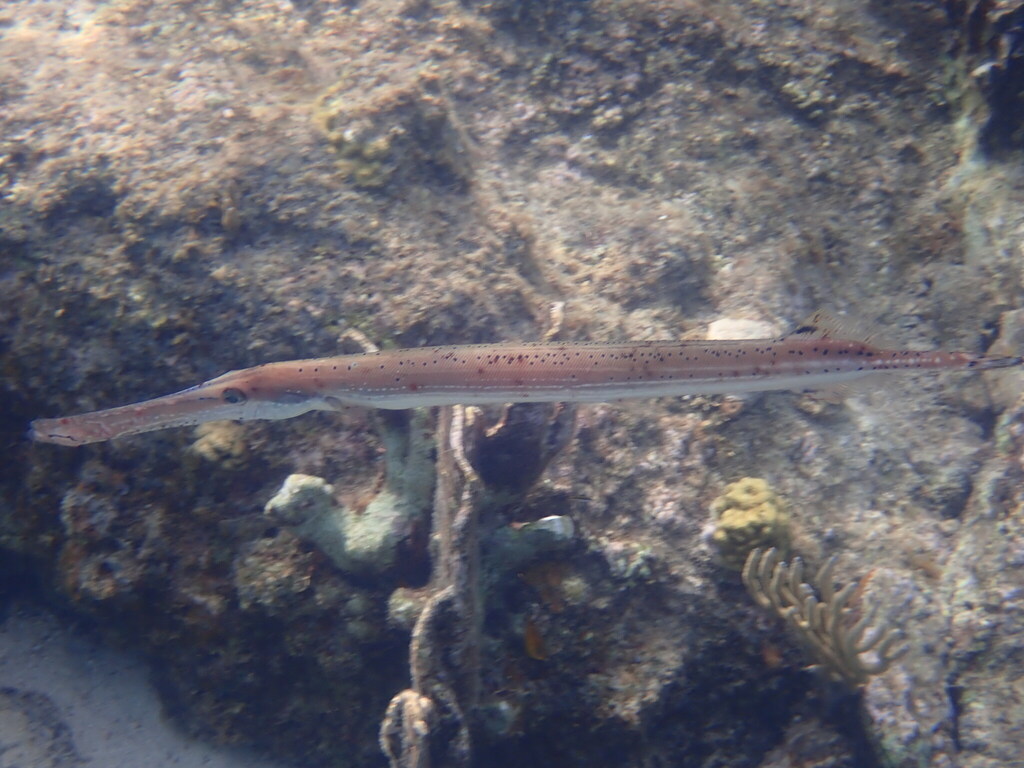 Photo: keesgroenendijk, CC BY
09
Trumpetfish
Aulostomus maculatus
Hangs at odd angles
Long and skinny, and usually just hanging there tilted sideways or head-down, like it forgot which way is up. Often tucked in among sea rods and soft coral, lined up with the branches. They'll also shadow a bigger fish, using it as cover to sneak up on prey. Brown, yellow, or bluish-grey — they change color to blend in, so look for the long snout.
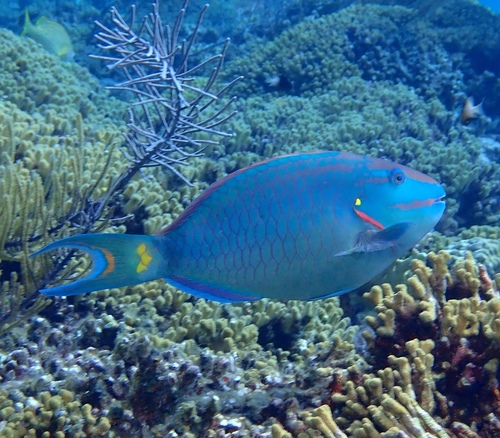 Photo: desertnaturalist, CC BY 4.0
10
Stoplight Parrotfish
Sparisoma viride
Listen for the crunch
Big, colorful, and doing the reef a real favor: parrotfish scrape algae off coral with a beak-like jaw, and much of the white sand on Curaçao's beaches ultimately comes out the back end of fish like these. Listen near the rocks and you can actually hear them crunching.
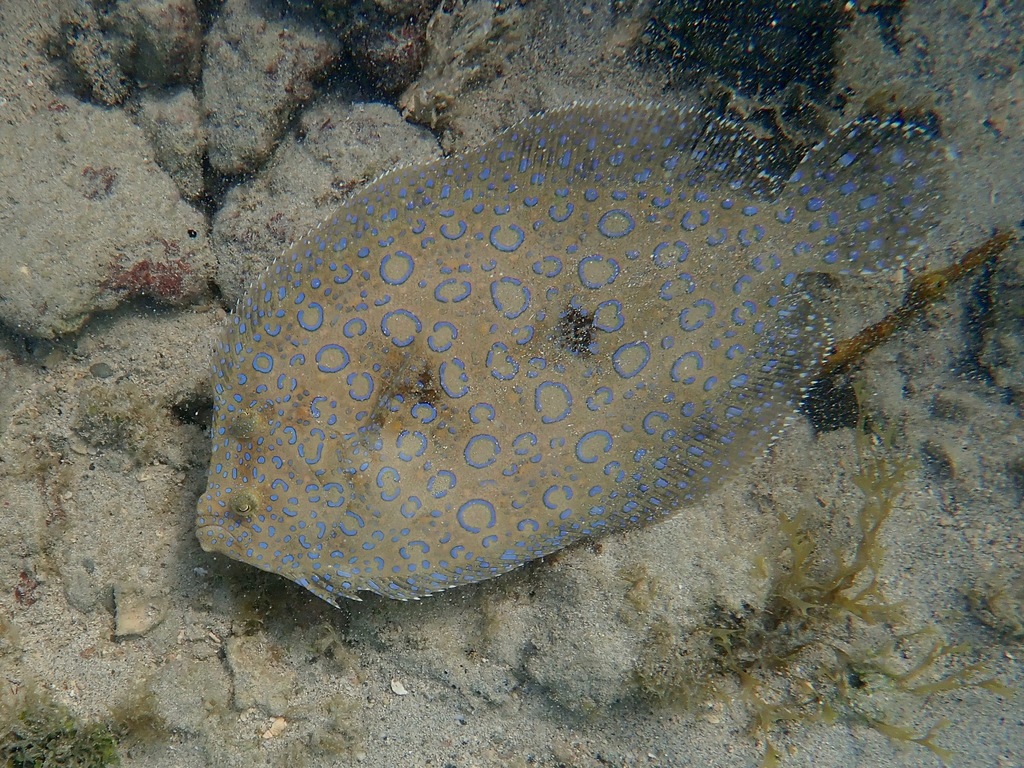 Photo: Eamon Corbett, CC BY
11
Peacock Flounder
Bothus lunatus
Can you spot it?
A flat fish lying on the sand with both eyes on one side of its head, covered in bright blue rings. It can change color to match the bottom almost perfectly, so you'll often see one only when it moves. Scan the sandy patches between reef sections.
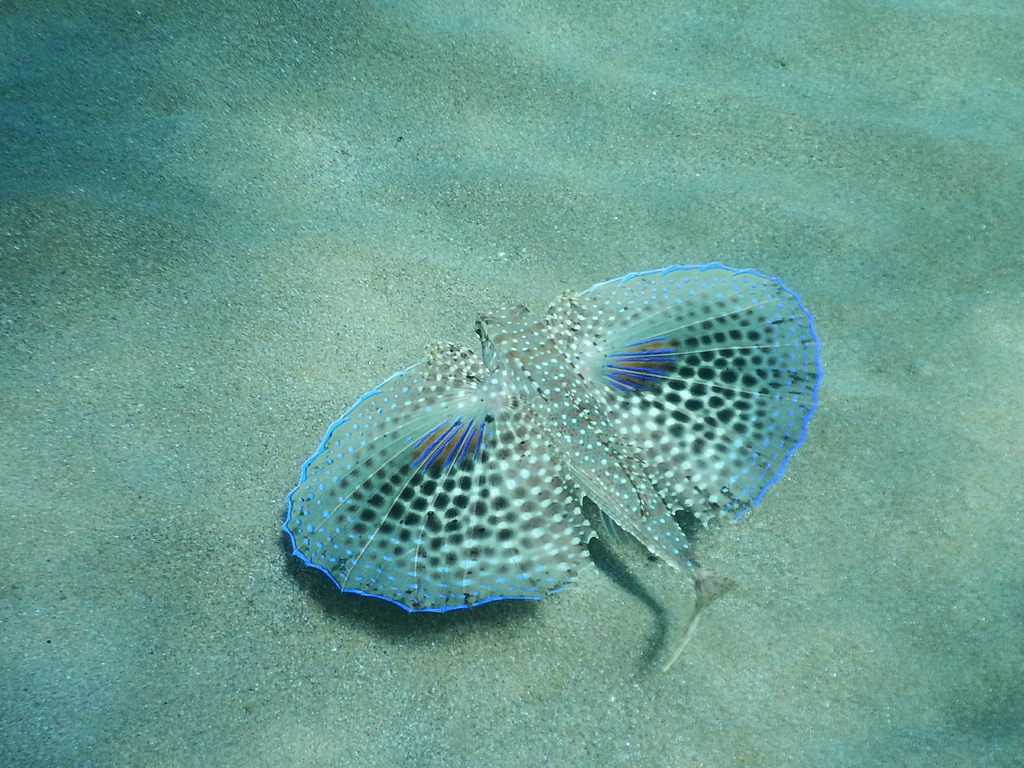 Photo: Chris Taklis, CC BY
12
Flying Gurnard
Dactylopterus volitans
Watch it open its wings
Brownish and easy to overlook as it "walks" along the sand on little finger-like fins. Get too close and it spreads a pair of huge fan-shaped fins edged in electric blue, like wings. Look over sandy patches in shallow water, and move slowly.
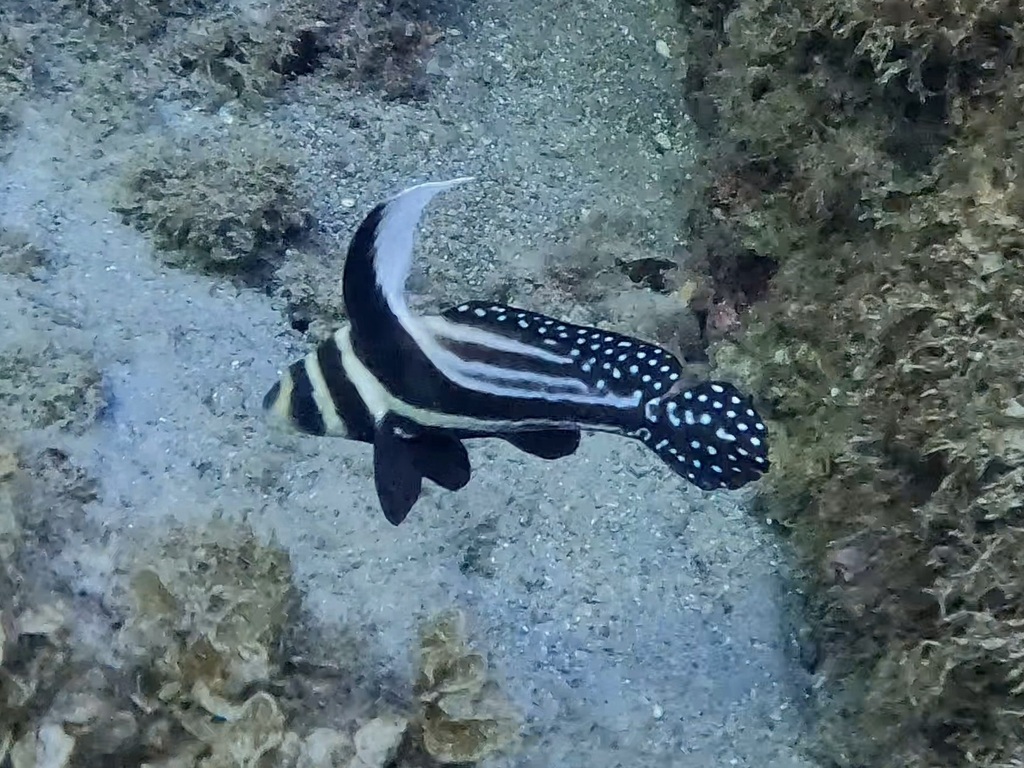 Photo: Matteo Bellucci, CC BY
13
Spotted Drum
Equetus punctatus
Look under ledges
The juveniles are the prize: small, black and white, with a ridiculously long trailing fin on top that they wave around as they swim in little loops. Adults are striped and spotted, with a tall fin of their own. They tuck under ledges and into crevices, and tend to stick to the same spot, so once you find one you can usually go back to it.
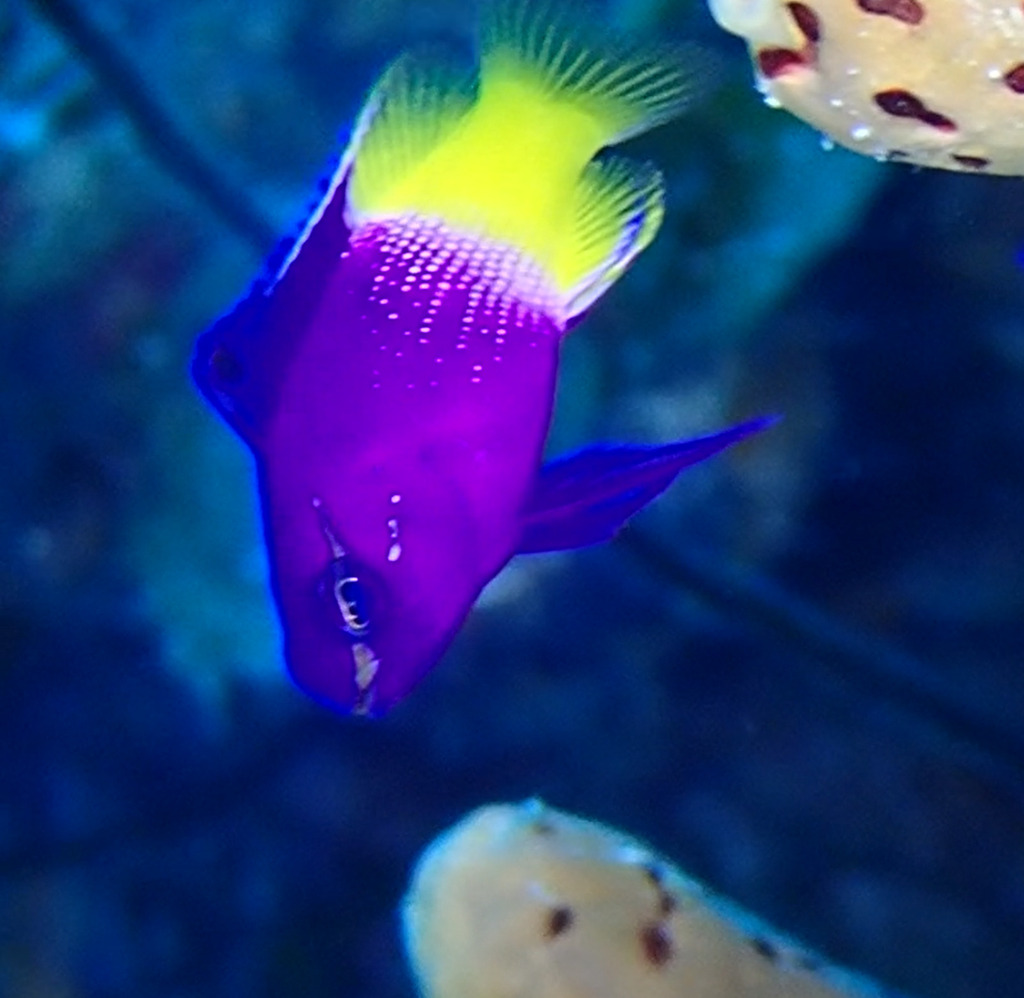 Photo: Rachel Crane, CC BY
14
Fairy Basslet
Gramma loreto · also called royal gramma
Often upside down
A tiny fish, only a couple of inches long, that's bright purple in front and bright yellow in back. Look under ledges and overhangs, where they hover close to the rock, often swimming upside down along the ceiling. Small, but the colors are hard to beat.
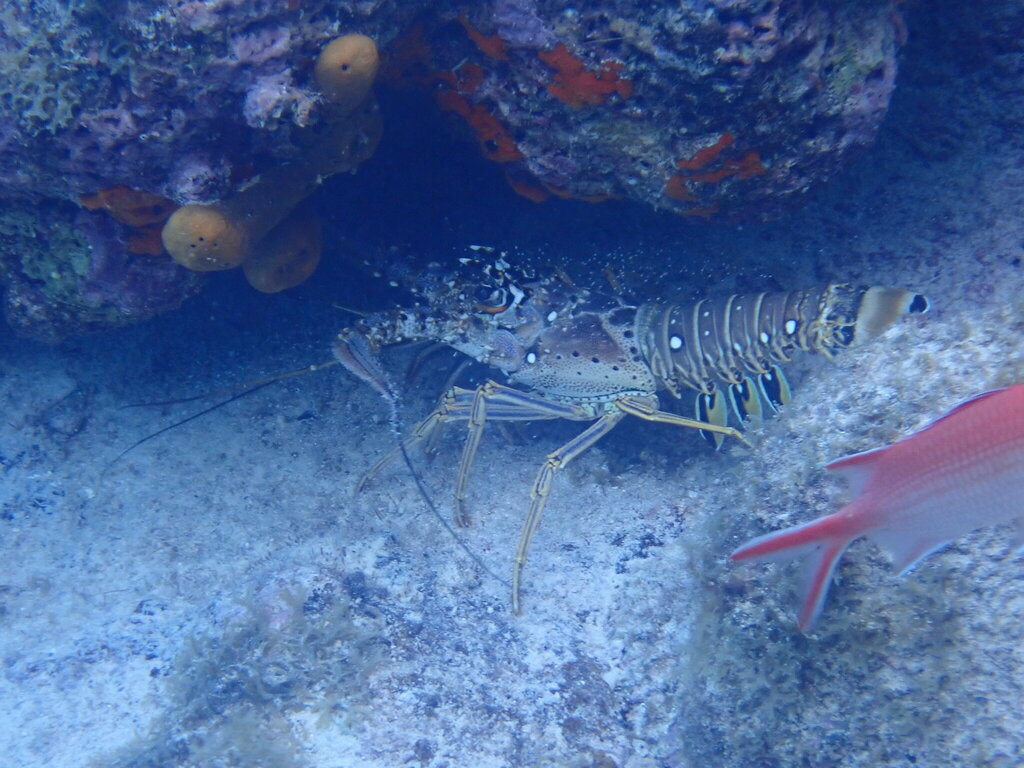 Photo: keesgroenendijk, CC BY
15
Caribbean Spiny Lobster
Panulirus argus
Look for the antennae
Usually the first thing you see is a pair of long, spiny antennae poking out from under a ledge or crevice, waving slowly. Hang still and you may get a look at the rest: a big, spiny, reddish-brown body with pale spots. No claws, unlike the lobsters most people picture.
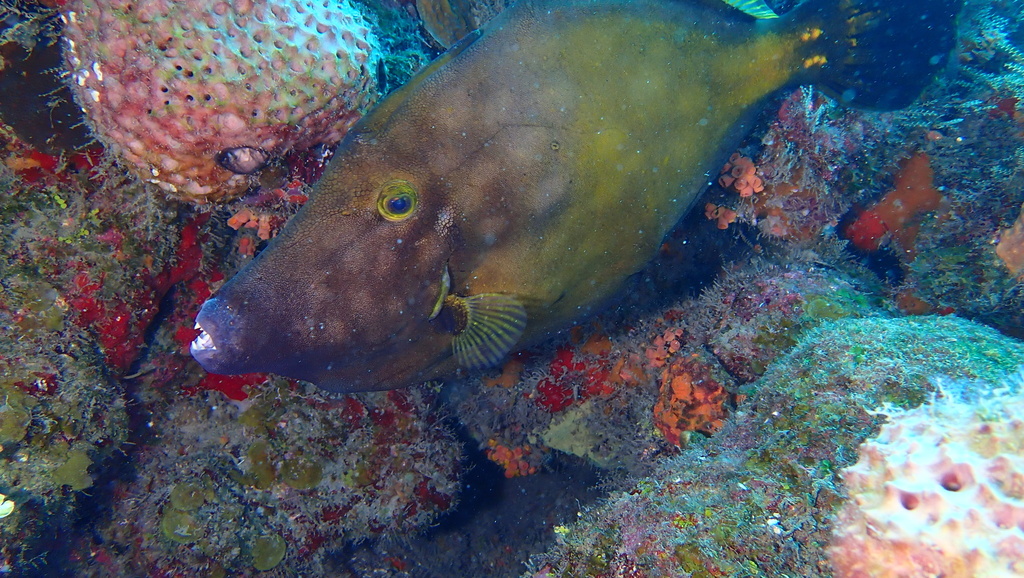 Photo: Robin White, CC BY
16
Filefish
Cantherhines macrocerus, Aluterus scriptus & others
Odd little shapes
A few kinds turn up around the island. The whitespotted filefish can switch between orange covered in white spots and plain grey in seconds; the scrawled filefish is long and flat, covered in blue scribbles, and often swims at a strange tilted angle. Usually in pairs.
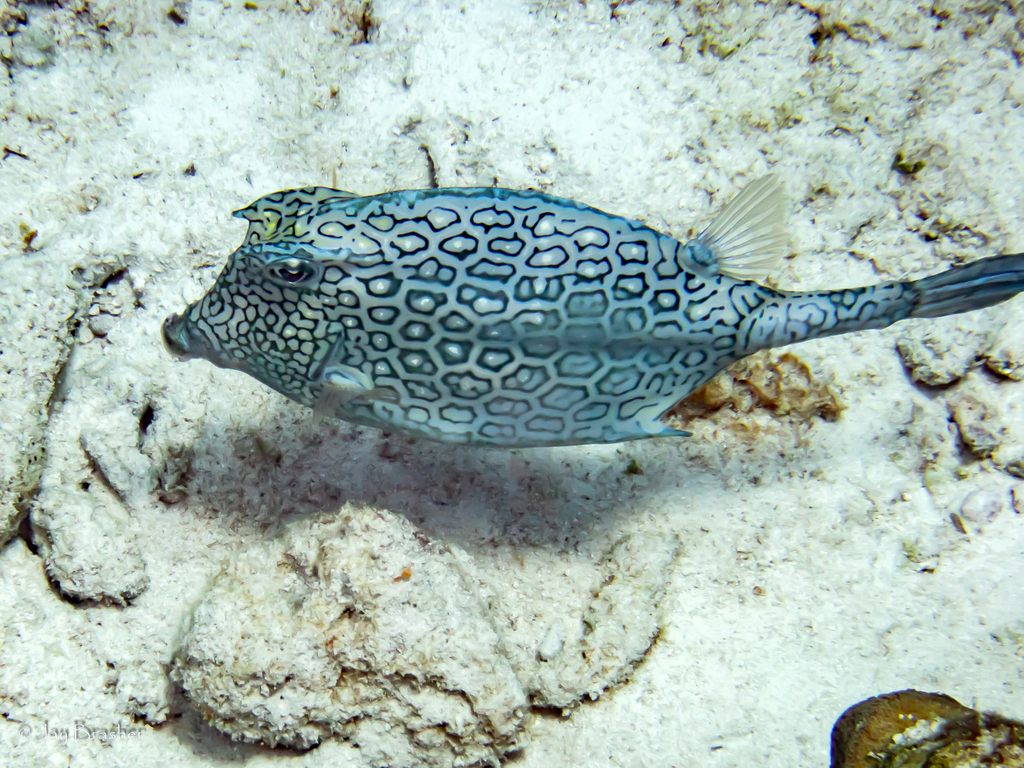 Photo: Jay Brasher, CC BY
17
Honeycomb Cowfish
Acanthostracion polygonius
Look for the horns
A boxy little fish with two short "horns" sticking out over its eyes and a hexagon pattern all over its body, like a honeycomb. It's a close cousin of the trunkfish and moves the same slow, hovering way, so if you find one you can usually get a good look. Can shift its colors and pattern to blend in.
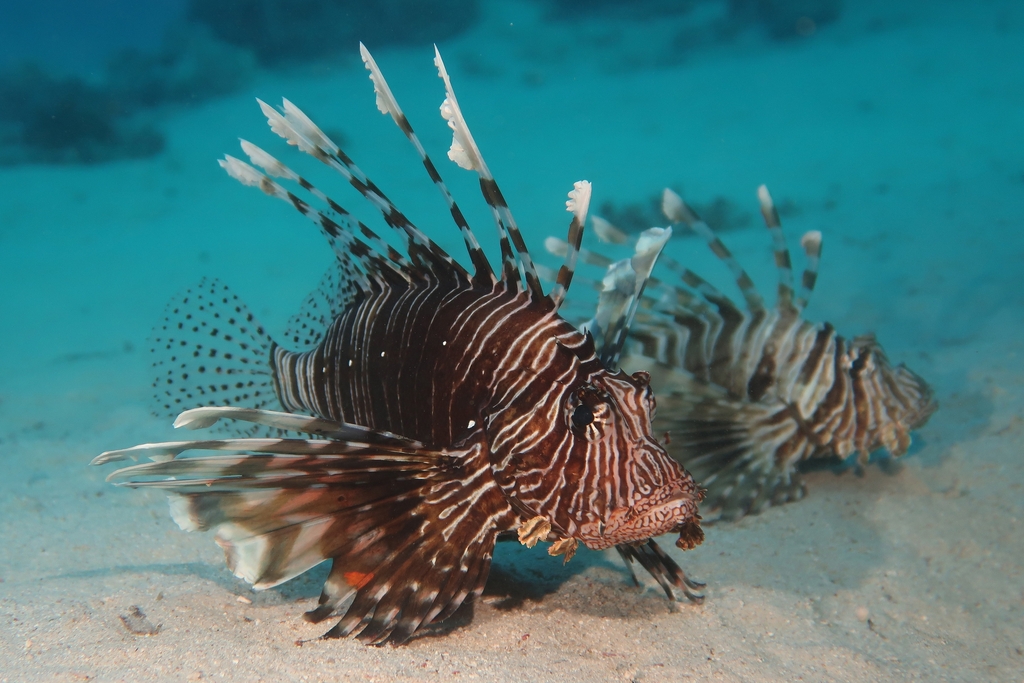 Photo: Daniel Benák, CC BY
18
Lionfish
Pterois volitans / miles
Invasive — don't touch
Beautiful and a real problem: lionfish aren't native to the Caribbean and eat huge numbers of young reef fish. Curaçao fights back with divers culling them, and they show up on local restaurant menus — order one. Their spines are venomous, so look but keep your distance.
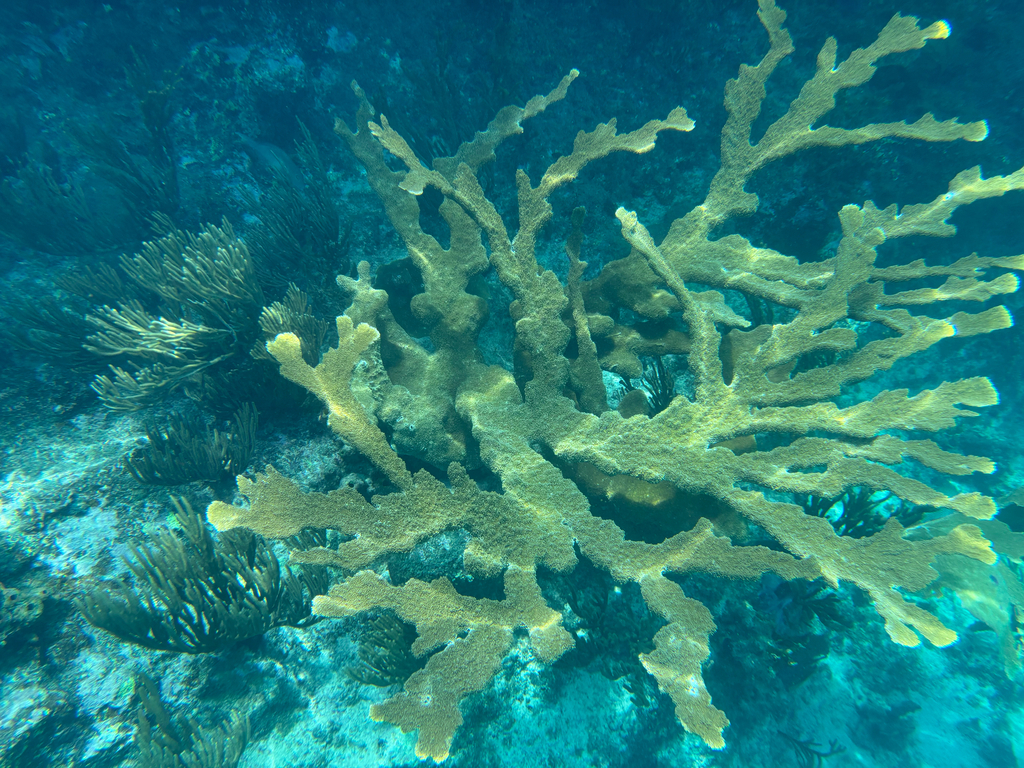 Photo: Denis Hurley
19
Elkhorn Coral
Acropora palmata
Critically endangered
Named for its wide, flattened branches that really do look like antlers. Once the dominant reef-building coral across the Caribbean, it's now critically endangered after mass die-offs — what's left is precious. Never touch it, stand on it, or let a fin brush it.

.jpg)