Your guide to the reef right off our stairs — the walk down, the water, and what's living in it.
Scroll
Direct Water Access
Carved into the Cliff, Steps to the Reef
A dramatic staircase carved directly into the coastal limestone winds past a small cave-like opening, leading straight down into the turquoise waters of Westpunt.
Shared exclusively by the residents and guests of Punta Azul and Marazul, this private path means no crowds, no day-trippers, and no streets to cross. Just walk down the steps, take the ladder entry, and you're instantly floating over a thriving coral reef teeming with colorful fish.
While the ladder looks steep in photos, the cove is naturally sheltered with calm, current-free water — making it an easy, unintimidating descent into some of the best snorkeling on the island.
The reef holds far more than this — these are 25 species we've identified right off the ladder. A few of the photos are ours; the rest are licensed shots from other divers and snorkelers (credited under each one), standing in for species we've seen but haven't caught on camera here ourselves yet. A handful (sergeant majors, bluehead wrasse, blue chromis) you'll see on every swim; the rest turn up if you're patient, or lucky. Stay a few days and snorkel a handful of times, and you'll almost certainly spot everything below.
Keep an eye out for the rarer sightings too — sea turtles, trumpetfish, squid, and barracuda have all turned up right off these steps. Not guaranteed, but they're out there.
Look, don't touch anything. Coral, fish, urchins, all of it — hands off keeps the reef intact for the next person who visits.
Reef-safe sunscreen only. Regular sunscreen is toxic to coral and other marine life. More on both below.
Photo: Pauline Walsh Jacobson, CC BY 4.0
01
Porcupinefish
Diodon hystrix
A slow, round-bodied fish covered in short spines that lie flat unless it feels threatened — it can inflate into a spiky ball as a last resort, but that's a stress response, not something to try to provoke. They get big, up to around 18 inches, and genuinely curious: give one space and it'll often drift closer to check you out rather than the other way around. Usually seen hovering calmly near rocks or crevices during the day.
Photo: desertnaturalist, CC BY 4.0
02
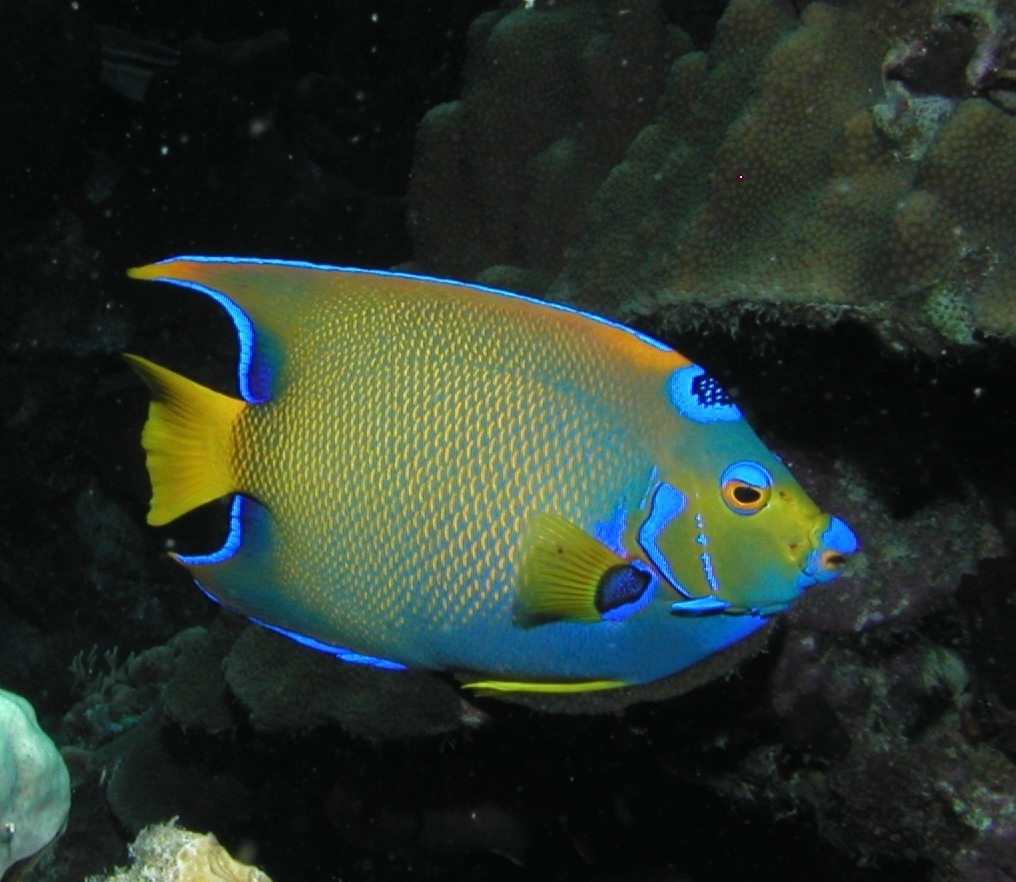
Queen Angelfish
Holacanthus ciliaris
Showstopper
The showiest fish on this reef — gold body, blue-tipped fins, and a dark "crown" spot ringed in electric blue on the forehead, which is where the name comes from. Solitary and a little shy, but worth the extra few minutes of quiet drifting to find.
Photo: desertnaturalist, CC BY 4.0
03
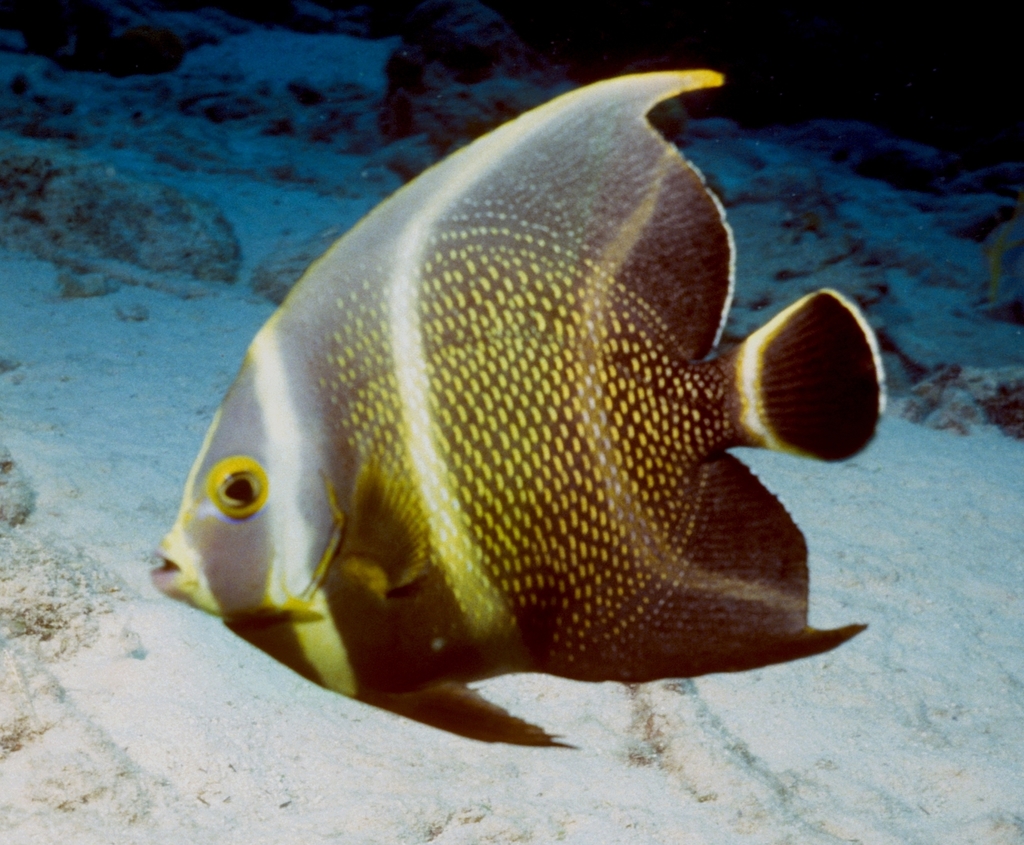
French Angelfish
Pomacanthus paru
Deep black body edged in gold scales that catch the light like sequins as it turns. Juveniles look completely different — black with vertical yellow stripes — so don't be surprised if a "different species" near a coral head turns out to be a young French angel.
Photo: Jay Brasher, CC BY 4.0
04
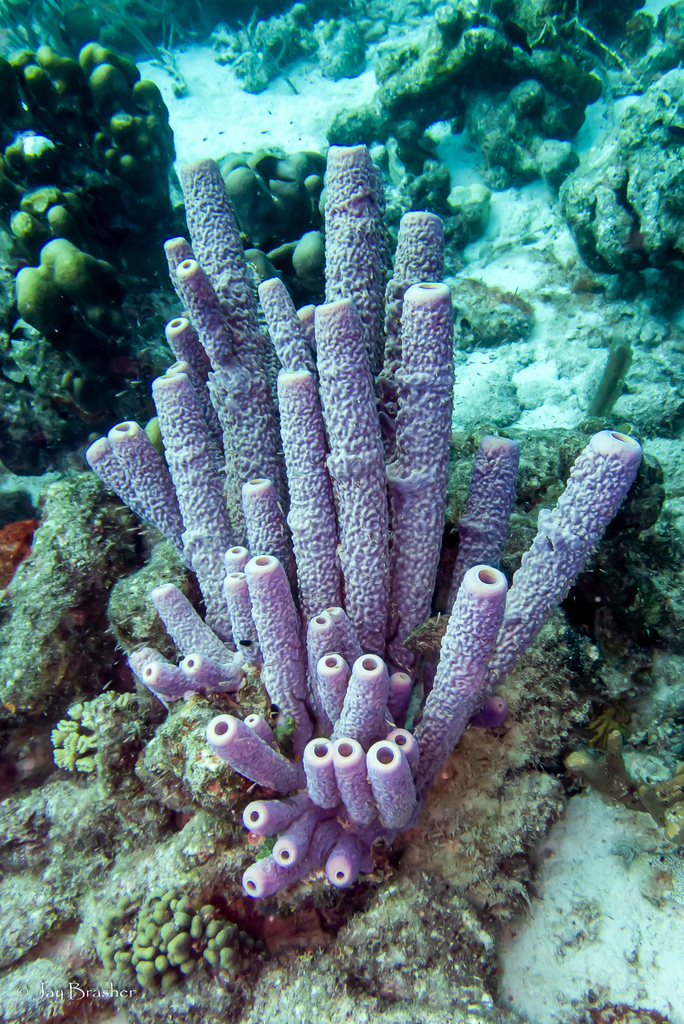
Purple Stovepipe Sponge
Aplysina archeri
Striking once you see it
Tall, narrow purple tubes rising straight up off the reef in small clusters, sometimes reaching several feet — genuinely one of the more striking sights once you spot a good cluster. Look but don't grab; sponges are fragile and slow-growing.
Photo: Dan Schofield, CC BY 4.0
05
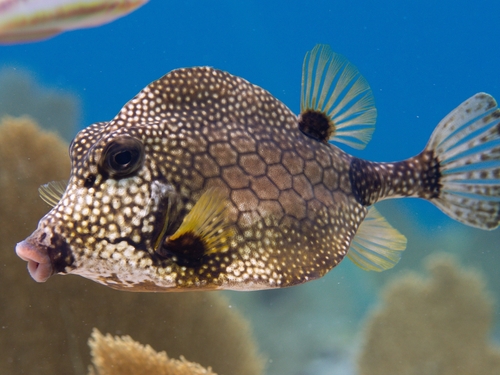
Smooth Trunkfish
Lactophrys triqueter
A boxy, slow-moving fish with a rigid, polka-dotted body armor instead of scales — it swims almost entirely with its small fins, giving it a distinctive hovering, deliberate motion unlike anything else on the reef. Easy to approach slowly since it rarely darts away.
Photo: desertnaturalist, CC BY 4.0
06
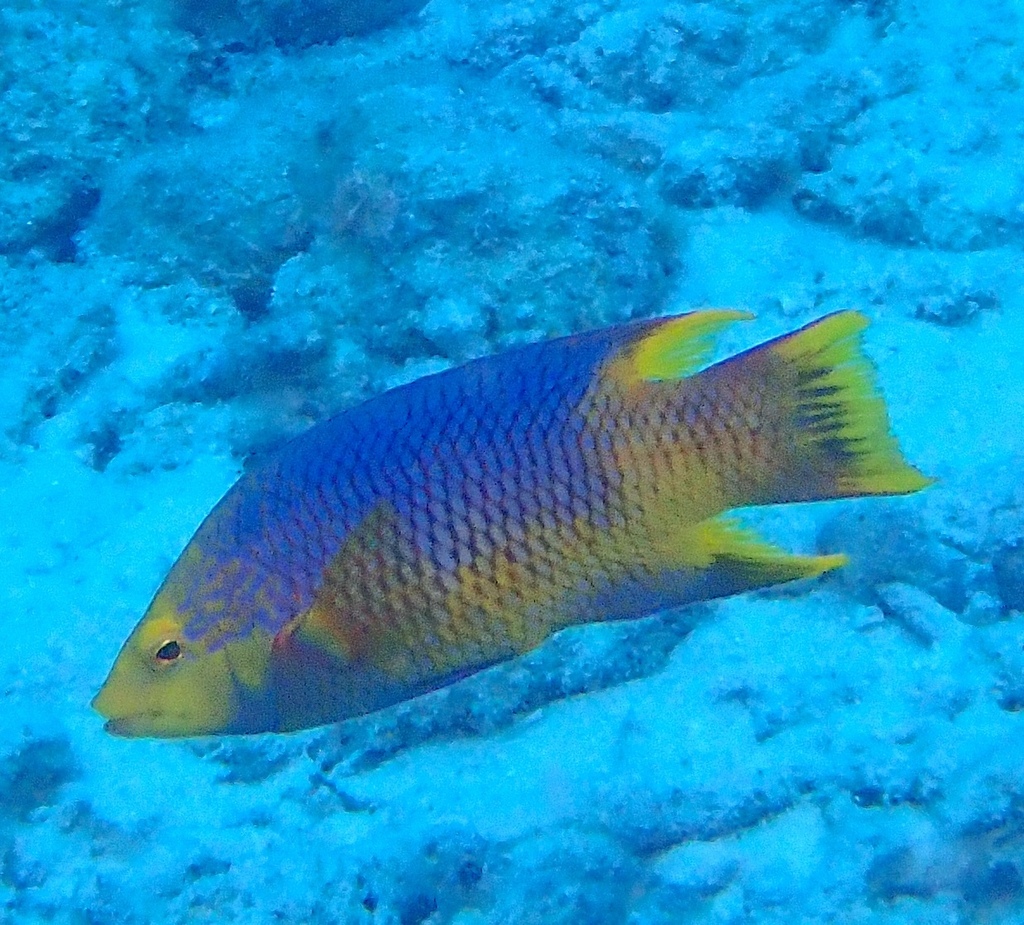
Spanish Hogfish
Bodianus rufus
Two-toned and easy to identify — deep purple-violet on the front half, bright yellow on the back half, with a clean line between the two. Acts as a cleaner fish, picking parasites off other fish at informal "cleaning stations" on the reef.
Photo: desertnaturalist, CC BY 4.0
07
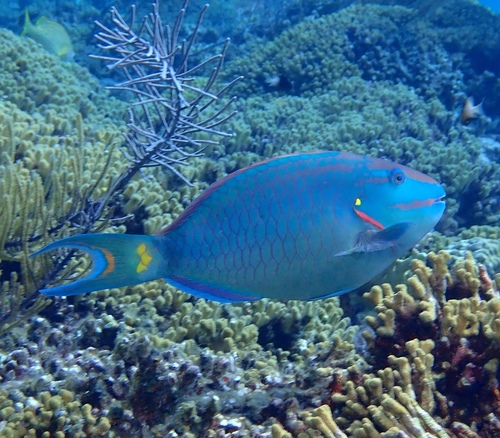
Stoplight Parrotfish
Sparisoma viride
Easy to spot
Big, unmistakable, and doing the reef a real favor: parrotfish graze on algae by scraping coral with a fused beak-like jaw, which is where all that white sand on the beach ultimately comes from. Listen closely underwater near the rocks and you can actually hear them crunching.
Photo: Denis Hurley
08
Blue Tang
Acanthurus coeruleus
Electric blue, disc-shaped, and usually moving in loose groups over the reef flat. Look for a small orange-yellow scalpel-like spine near the base of the tail — it's how the fish defends itself, and also how it got its "surgeonfish" family name. Juveniles are bright yellow before they turn blue.
Photo: desertnaturalist, CC BY 4.0
09
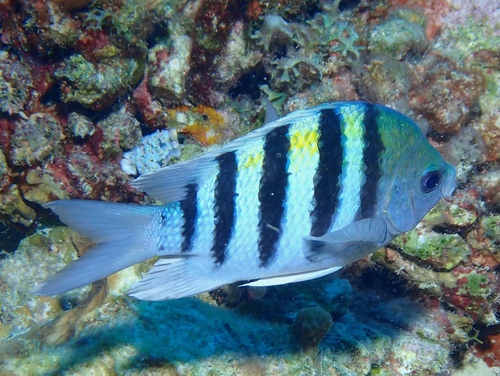
Sergeant Major
Abudefduf saxatilis
You'll see this first
The welcoming committee. These yellow-and-black striped damselfish patrol the shallows in loose schools and will investigate you within seconds of getting in. Territorial around the rocks where they guard purple egg patches — give a nesting one a little berth and it'll leave you alone.
Photo: Denis Hurley
10
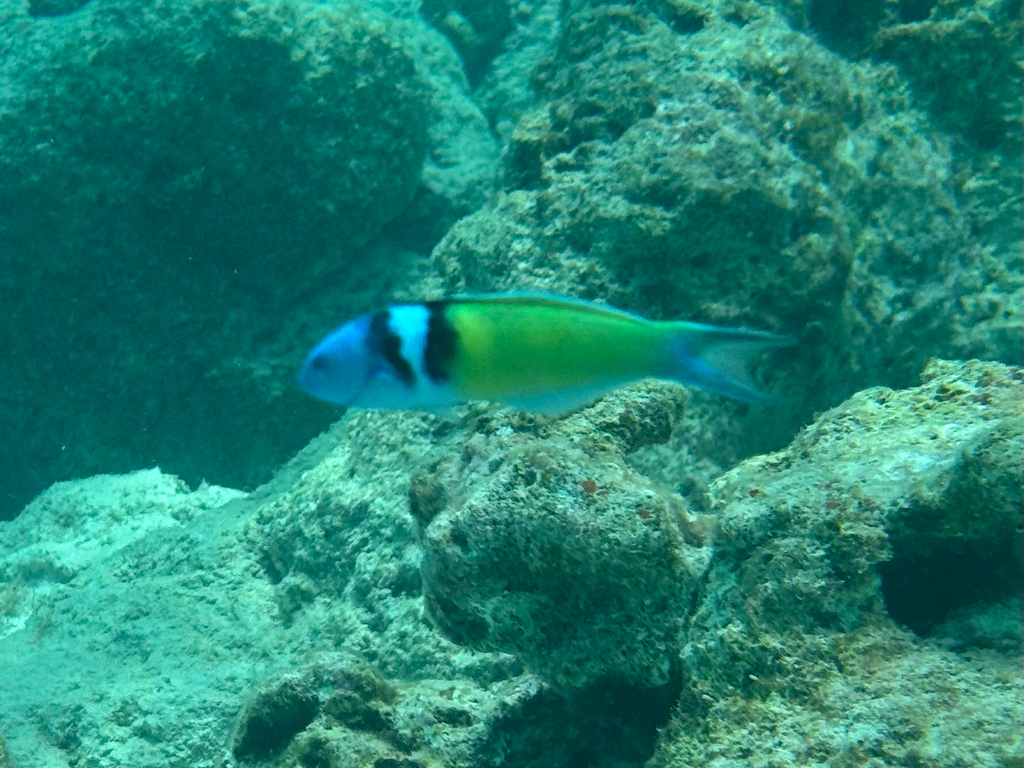
Bluehead Wrasse
Thalassoma bifasciatum
Extremely common
One of the most abundant fish on any Caribbean reef, constantly darting around in short bursts. Adult males have the namesake electric-blue head with black-and-white bands behind it; females and juveniles are plain yellow, so what looks like two different fish is often the same species.
Photo: Paul Asman and Jill Lenoble, CC BY 2.0
11
Yellowtail Snapper
Ocyurus chrysurus
Silvery, fast, and marked by a bold yellow stripe running the length of the body straight into a matching yellow tail. Often in schools mid-water rather than hugging the bottom — if you see a shimmering group moving as one, it's probably these.
Photo: desertnaturalist, CC BY 4.0
12
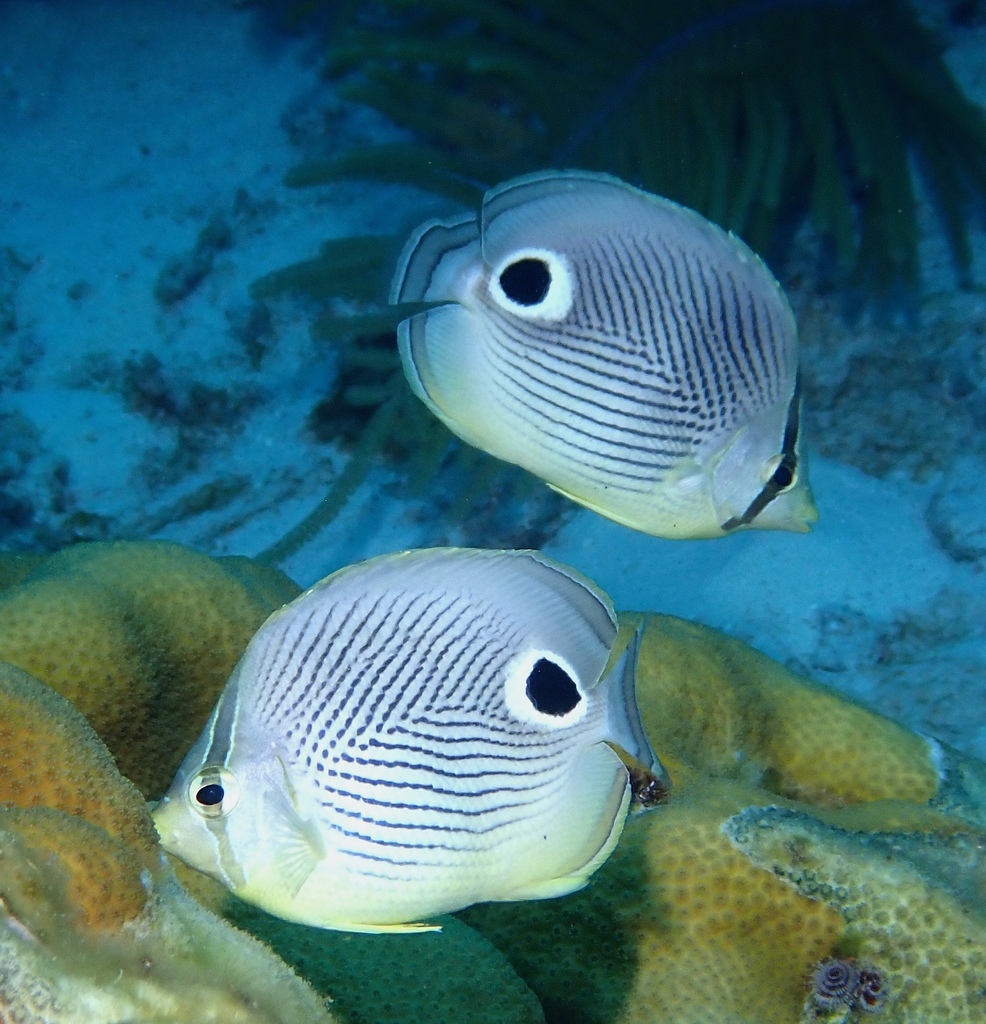
Foureye Butterflyfish
Chaetodon capistratus
A pale, disc-shaped fish with a bold black eyespot near the tail and a real eye camouflaged in a dark stripe — a decoy that confuses predators about which end is the head. Usually seen in pairs; they mate for life and stay close to their partner across the reef.
Photo: Denis Hurley
13
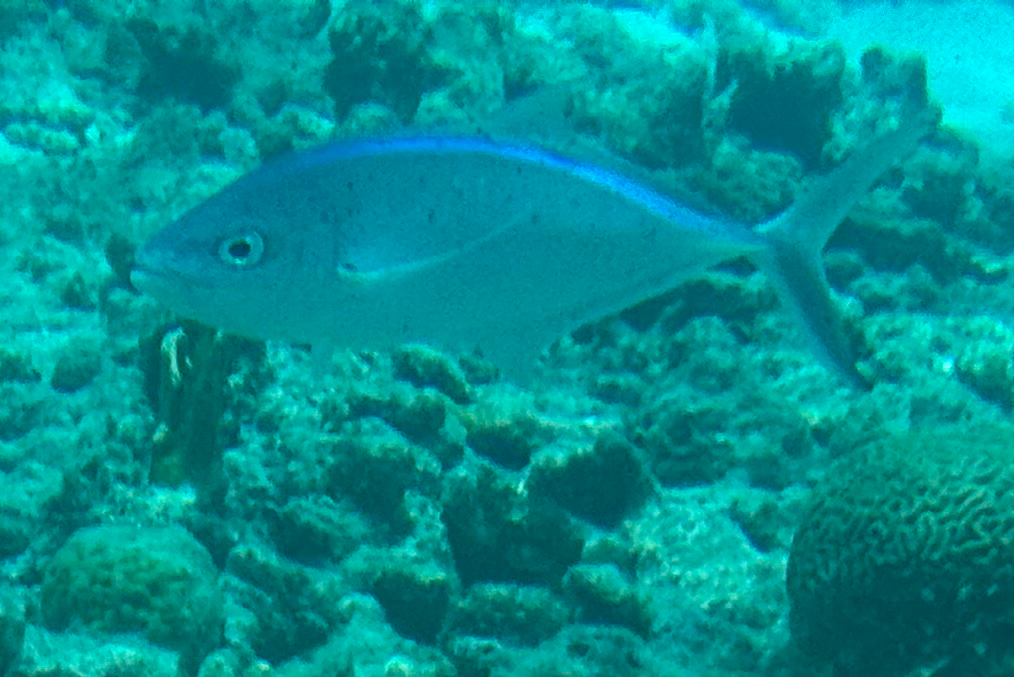
Bar Jack
Carangoides ruber
Sleek, silvery, and fast — a dark stripe runs along the back down into an electric-blue tail. Bar jacks often shadow larger fish or even snorkelers, using the disturbance to snap up anything small stirred off the bottom. Don't be surprised if one starts tailing you.
Photo: desertnaturalist, CC BY 4.0
14
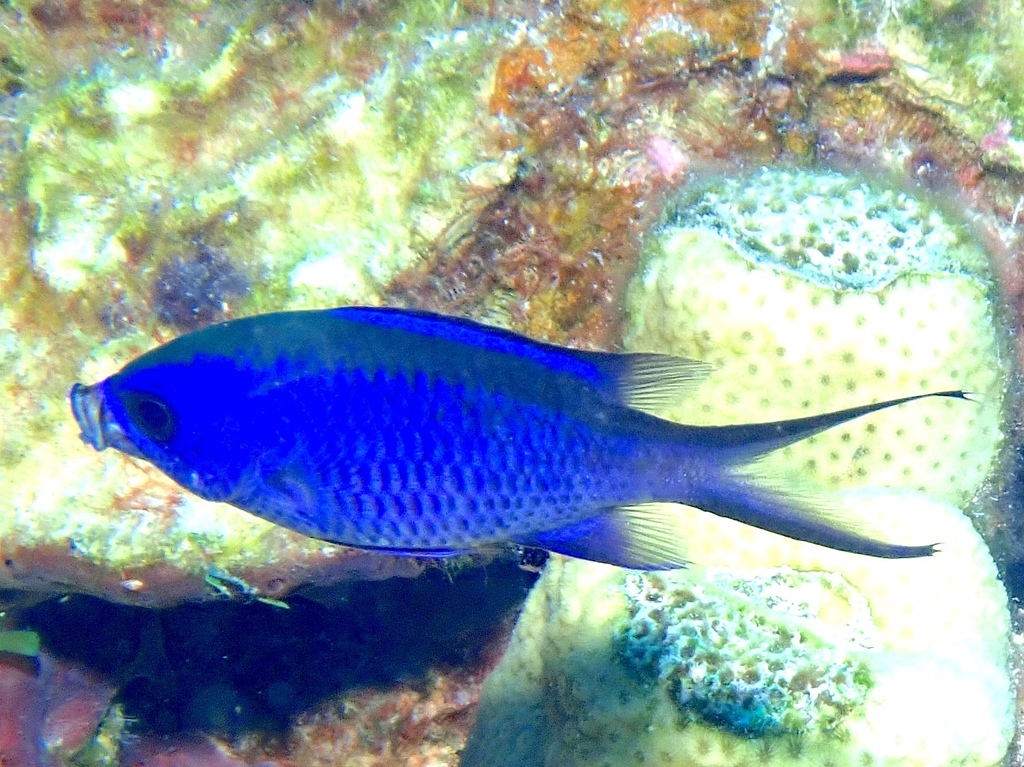
Blue Chromis
Chromis cyanea
Constant background presence
The little iridescent blue fish that hover in loose clouds just above the coral. They pick plankton straight out of the water column and scatter into the reef the instant anything comes close, only to regroup a few seconds later. One of the most common sights on the whole reef.
Photo: desertnaturalist, CC BY 4.0
15
Redlip Blenny
Ophioblennius macclurei
A small, dark, torpedo-shaped fish that perches on rocks and dead coral rather than swimming freely, darting a few inches at a time. Look for the bright red-orange lips that give it its name — easiest to spot when it's sitting still, propped up on its pectoral fins. Plenty of them hang out right around the stairs themselves.
Photo: desertnaturalist, CC BY 4.0
16
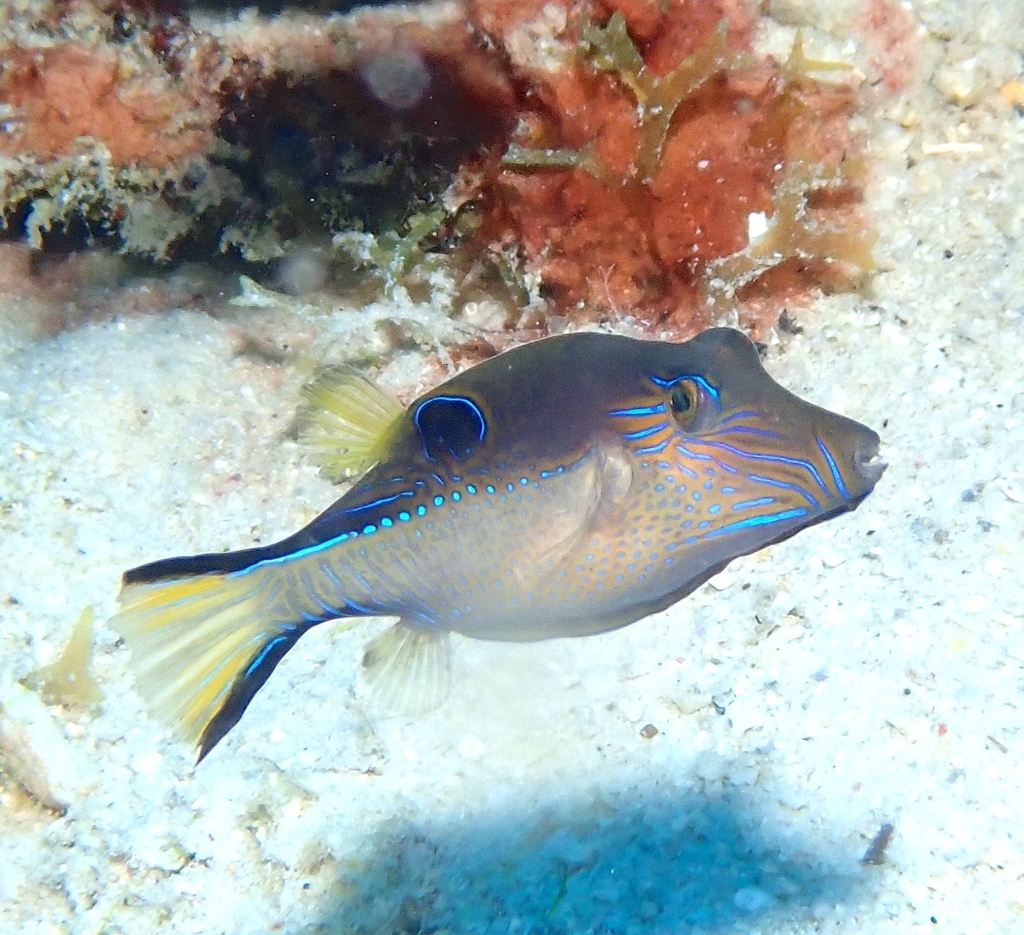
Sharpnose Puffer
Canthigaster rostrata
Small, round, and easy to miss at first glance — look for the pointed snout and fine blue squiggly lines near the tail. Usually solitary, hovering close to the reef rather than swimming in open water, and generally unbothered by snorkelers nearby.
Photo: Nick Hobgood, CC BY-SA 3.0
17
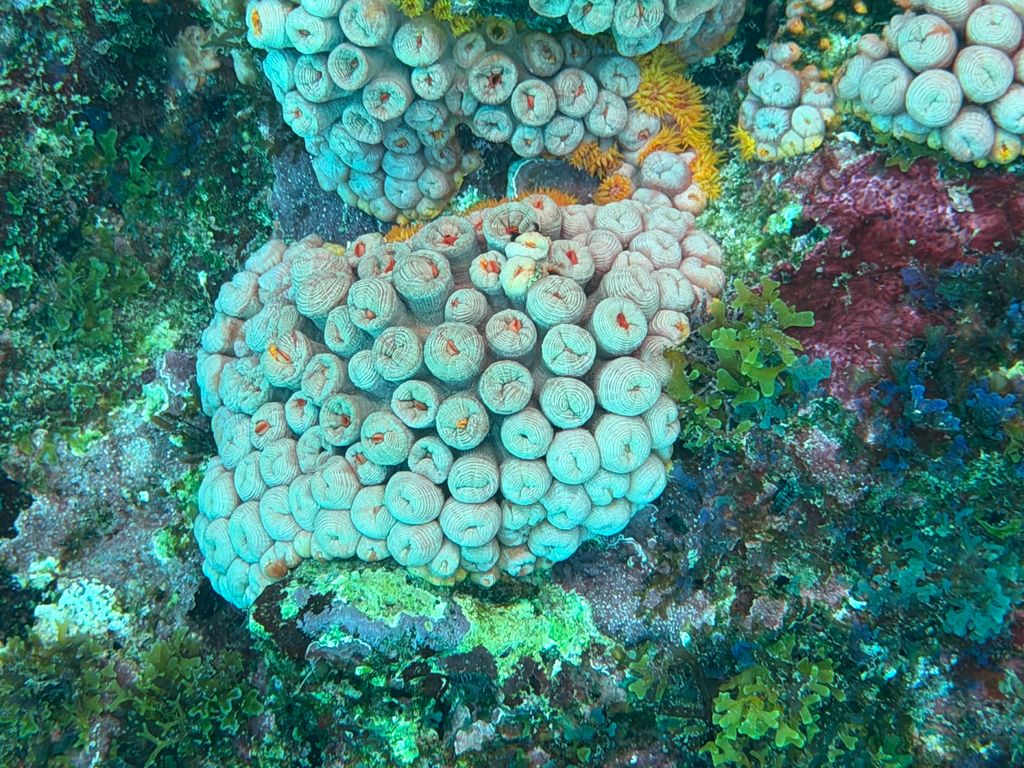
Christmas Tree Worms
Spirobranchus giganteus
Tiny, brilliant, and everywhere once you know to look — twin spiral "trees" in electric blue, orange, or yellow, no bigger than a fingertip, growing straight out of brain and boulder coral. Wave a hand nearby (without touching the coral) and watch them vanish instantly into their tube.
Photo: Robin White, CC BY 4.0
18
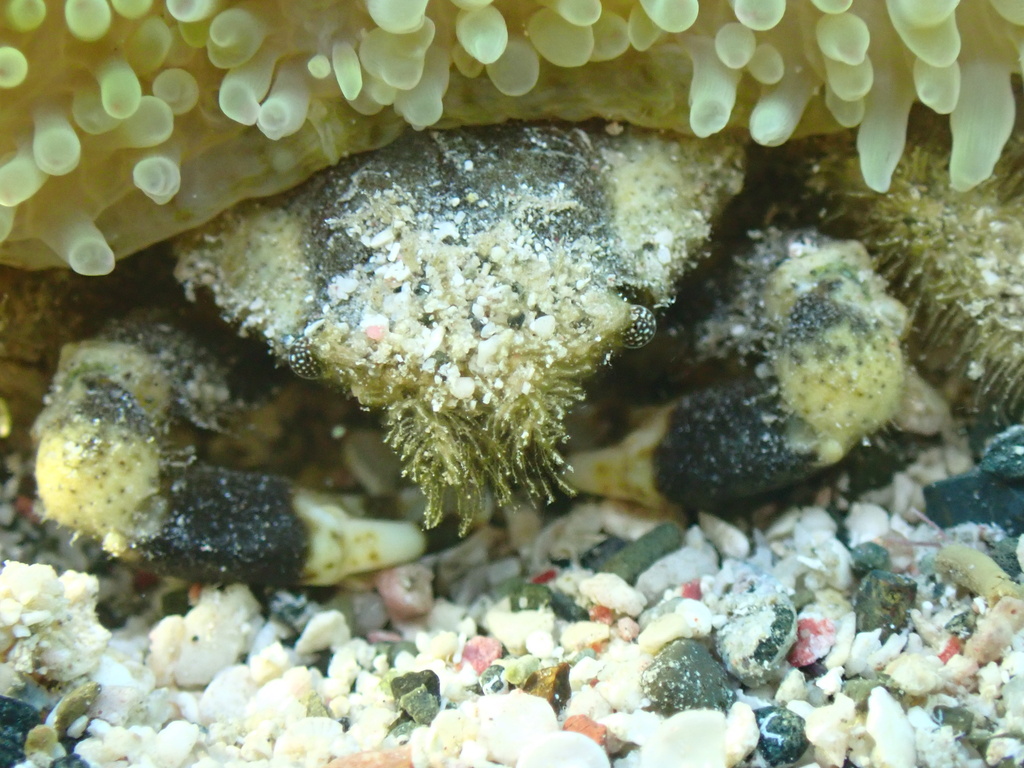
Banded Clinging Crab
Mithraculus cinctimanus
Lives in the sun anemones
These are the little crabs living in the sun anemone cluster — small, olive and cream, with pale-banded claws. It's a genuine partnership: the crab gets protection in the anemone's stinging tentacles, and it helps keep the anemone clean in return. Look closely between the tentacles rather than reaching in.
Photo: Denis Hurley
19
Tidal Spray Crab
Plagusia depressa
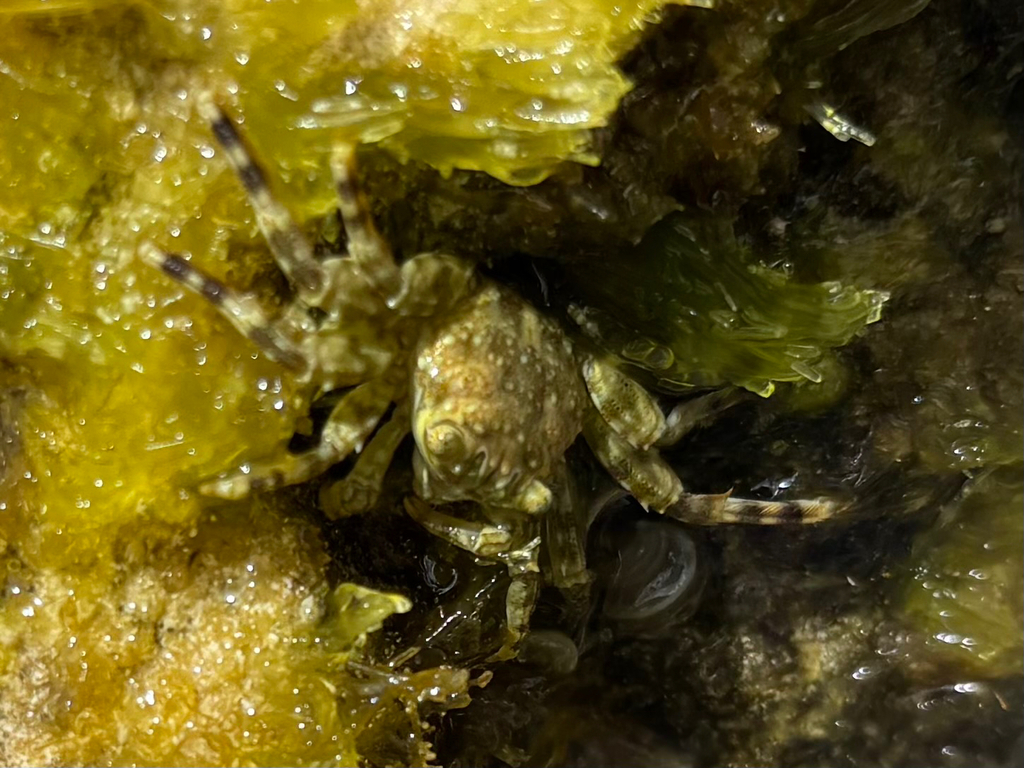
Reddish-brown and very fast, living right at the waterline on rocks rather than underwater proper — you'll likely spot this one getting in or out at the ladder rather than while snorkeling. Freezes at the first sign of movement, then bolts sideways into a crevice.
Photo: Denis Hurley
20
Orange Cup Coral
Tubastraea coccinea
Small clusters of bright orange polyps tucked into shaded crevices and overhangs rather than out in the open. Unlike reef-building corals, these don't rely on sunlight — look for them under ledges and ridges where the light doesn't reach directly.
Photo: Pauline Walsh Jacobson, CC BY 4.0
21
Purple Sea Fans & Soft Coral
Gorgonia ventalina, and relatives
Not animals you'll see moving, but the reef's architecture — tall purple fans and swaying "sea whips" that sway with the surge and give the whole reef its texture. They're delicate; a single fin kick can snap decades of growth, so keep a body-length of distance and check your fin position before you stand up.
Photo: Denis Hurley
22
Sun Anemone
Stichodactyla helianthus
Look, don't touch — real sting
There's a big cluster of these right at our spot — a flat, carpet-like anemone in green and gold with hundreds of short, thick tentacles. Sun anemones pack a real sting (worse than most Caribbean anemones), so admire without touching. Look closely between the tentacles and you'll usually spot the little crabs that live there.
Photo: Denis Hurley
23
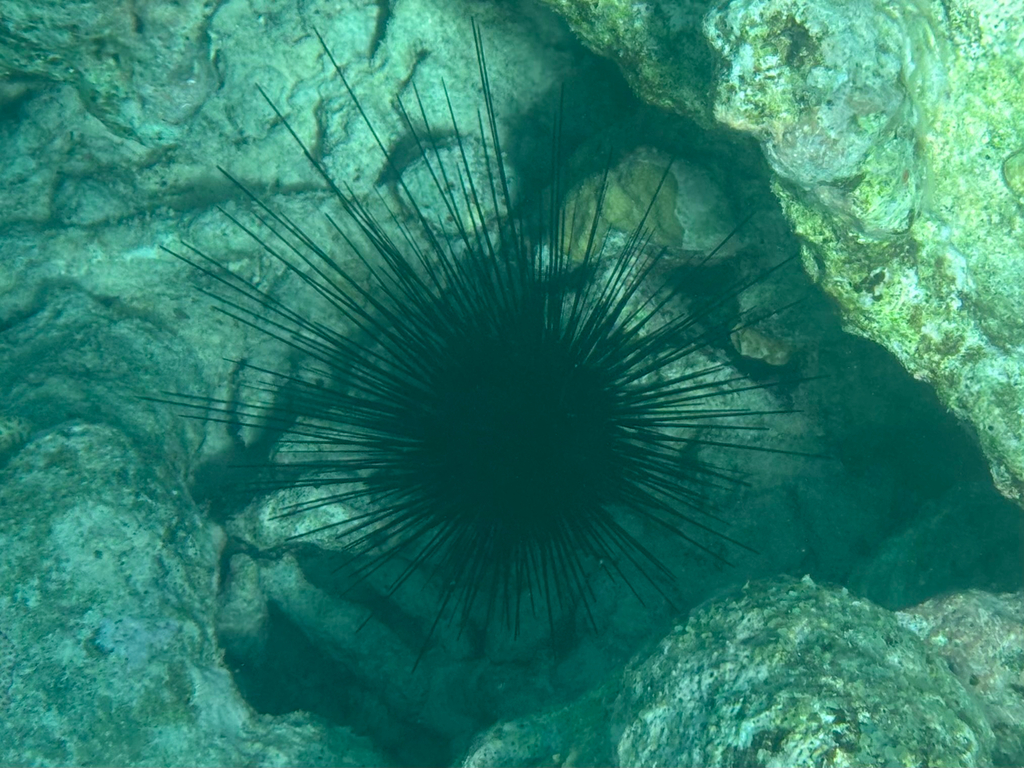
Long-Spined Sea Urchin
Diadema antillarum
Watch your step
The one thing on this list that can genuinely ruin your afternoon if you're careless. Black, spiky, and usually wedged into rock crevices in shallower water — easy to see and easy to avoid, but the spines break off in skin and are no fun to remove. None cluster right at the stairs, but it's always worth watching where you step in the water.
Photo: djscho, CC BY 4.0
24
Touch-Me-Not Sponge
Neofibularia nolitangere
Look, don't touch — irritates skin
An olive-green, lumpy encrusting sponge covering the rock in irregular patches, dotted with small round pores. It's not coral and it's not soft the way it might look — contact with skin can cause an itchy, uncomfortable rash that lingers for a day or two. Easy to avoid once you know what it looks like.
Photo: Denis Hurley
25
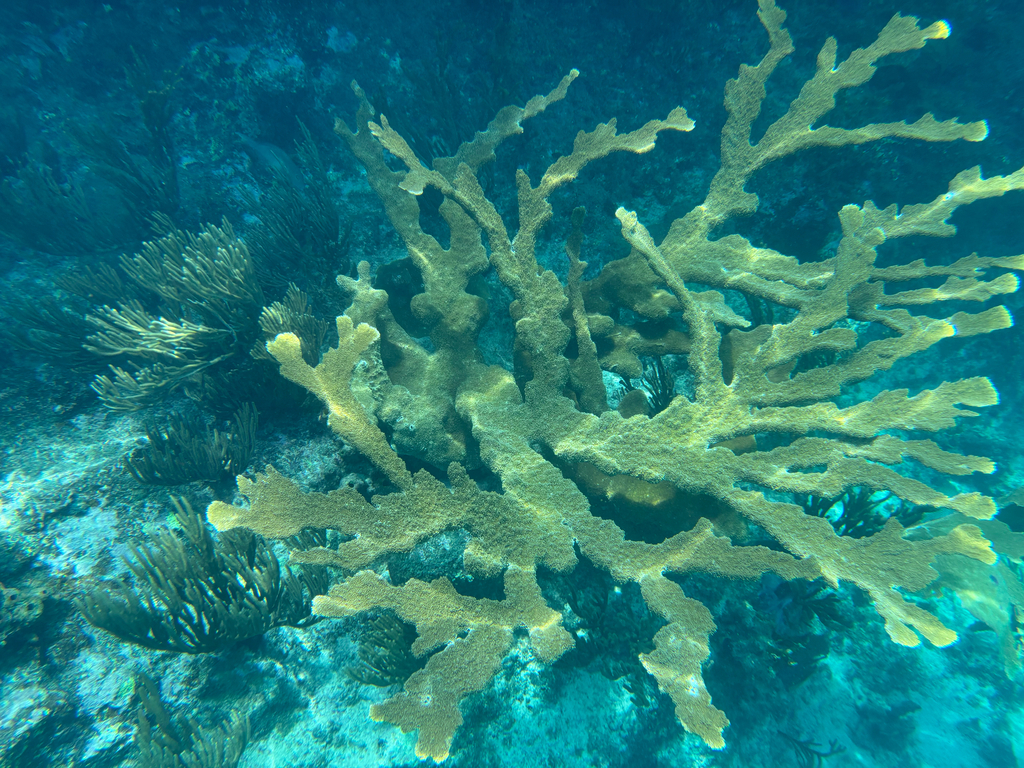
Elkhorn Coral
Acropora palmata
Critically endangered — never touch
Named for its wide, flattened branches that really do resemble elk antlers. This was once the dominant reef-building coral across the entire Caribbean, and it's now critically endangered after mass die-offs — what's left is precious. Never touch it, stand on it, or let a fin brush against it; a single contact can undo decades of growth.
Before You Get In
A Few Things Worth Knowing
This is a wall — you're snorkeling right along it from the ladder, not swimming out to find it. It's thriving. Help keep it that way.
Reef-safe sunscreen only
Oxybenzone and octinoxate are toxic to coral and other marine life even in tiny amounts — look for a mineral-based (zinc oxide) sunscreen instead of the usual kind.
Look, don't touch
Coral is a living animal and takes years to grow back from a single touch or fin strike. Keep hands and fins off everything, including the rocks — and give the sun anemones and touch-me-not sponge extra distance, since both can sting or irritate skin.
Don't feed or chase
Feeding fish changes their behavior and can make them sick. Give the elkhorn coral and any anemones a wide berth — one is critically endangered, the other stings.
It's a free, global platform — website, app, and a huge community of naturalists — for identifying and logging anything you see, not just here. Snap a photo as you snorkel, and it helps you learn what you're looking at, and share it with people who actually know.
Exploring the rest of the island?
Turtles, octopus, eels, seahorses and more, plus six beaches worth a swim, in our guide to snorkeling all of Curaçao.
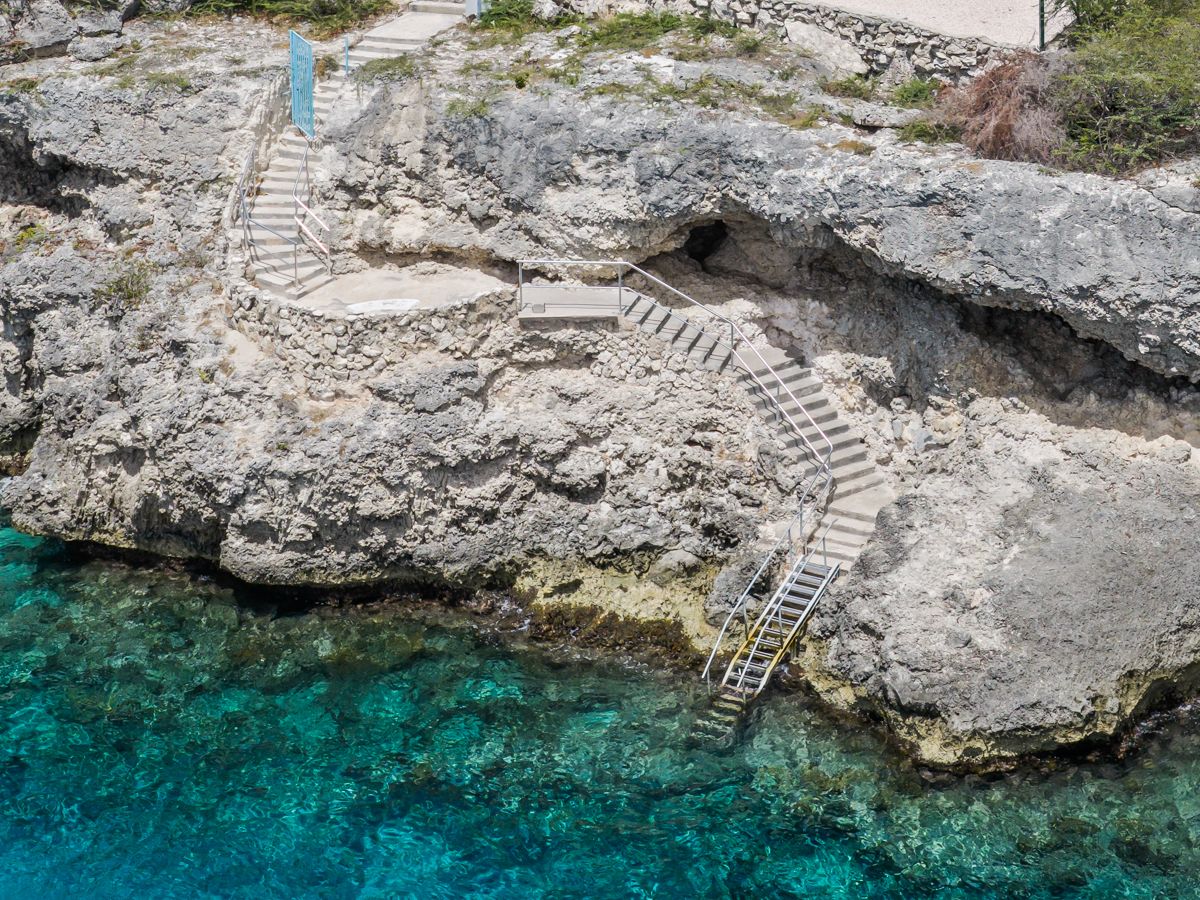
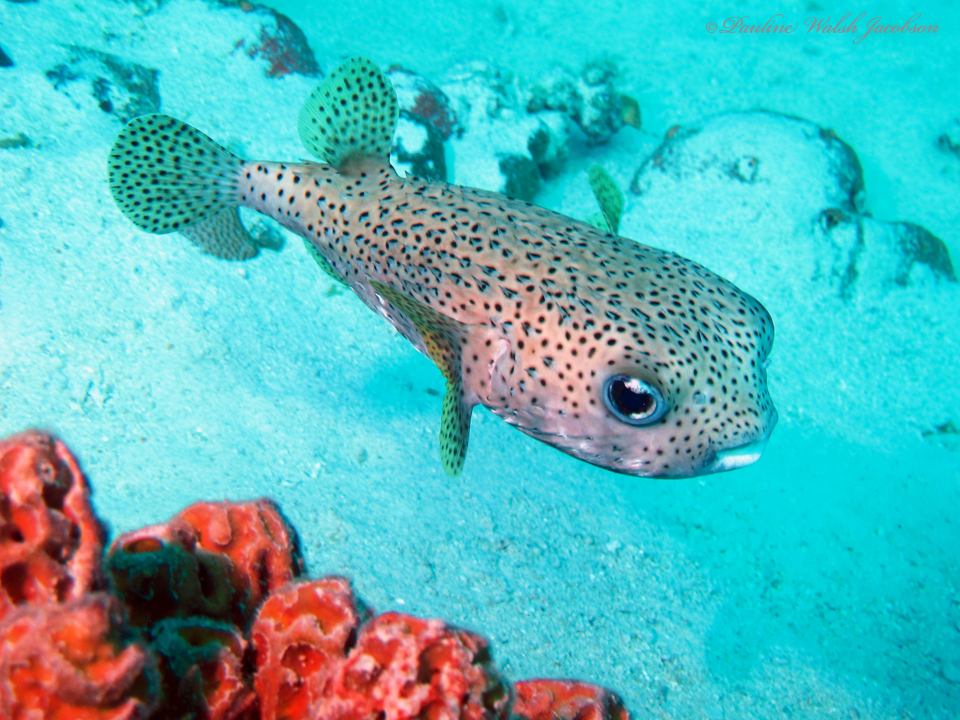 Photo: Pauline Walsh Jacobson, CC BY 4.0

.jpg)